A Flawed Life

I remember getting into an argument with Mama Benchly when I was 7 or 8 years old and tantrums were the logical and normal choice of attack. The tantrum most likely occurred after Sisters #1 and 2 refused to include me in whatever it was they were doing at the time, as was their right and responsibility as older siblings. I pleaded with my mom for her to have one more child and to please make that child a boy. I wanted a brother to play with and my childhood thought process was able to gloss over the fact that such an age gap would have meant that I would have ended up being the one refusing to include a younger sibling in whatever it was I was doing. Mama Benchly’s response was simple: she and Papa Benchly had decided that all of the complications associated with my birth had meant that it would be greedy and dangerous for them to try for more.

Seven or eight years earlier, Mama Benchly was gardening in our family’s Champlain, NY yard one summer evening when her water broke. After rushing to the hospital 30 minutes away, and after a labor that lasted just 90 minutes, I entered the world. At first glance, it seems like the picture-perfect, normal delivery; however, a second glance shows that I gave them a scare by wrapping the umbilical cord around my neck as well as by having an irregular heartbeat. Add to that the fact that I was born with one less pectoral muscle than the normal baby, as well as the fact that a few short years later, two toes on each of my feet would have grown overlapping each other if it wasn’t for corrective surgery, and my parents understandably saw the warning signs written on their son’s pectoral-less flat chest: try for more and you might not be as lucky.

As you can imagine, considering how desperate adolescents are to fit in with the crowd by not sticking out of it, I had a difficult time coming to terms with my pectoral deformity. Though I always loved gym class, I dreaded changing into and out of my clothes in the locker room where I ran the risk of being exposed as a deformed imposter posing as a normal kid. (I’ve still mostly blocked out of my memory the times in gym when the instructor made our teams play “shirts and skins.”) And to be honest, finding peace and comfort with my deformity has been a lifelong struggle against which I often find myself losing. I’m still hesitant to remove my shirt in public, and while it took quite a bit of trust for me to reveal the deformity to past girlfriends (again, it speaks volumes about the kind of woman my future wife is, that I felt comfortable telling her about it on our third date), regardless of how much I’ve trusted my close friends, it’s 33 years after my birth and most of my readers (read: friends) will be hearing of it for the first time in this blog post. I imagine Sarah the L didn’t even know about it. So considering my age, it’s ironic to think that it took a juvenile insult thrown my way from an adult posing as an adolescent to help me come to terms with my deformity.

Like most kids in my generation who grew up loving baseball, trading baseball cards, and memorizing the statistics on the backs of said cards, I became an adult who finds pleasure in playing in a fantasy baseball league each year. And thanks to Mr. Extracurricular, I’ve had the pleasure of playing in a locally-based league for the past two years (complete with a live draft! [I know how this sounds, so don’t bother telling me]). We expanded the number of teams this year and in doing so we welcomed aboard a few friends and some friendly strangers. One of these strangers (for the sake of rhyming anonymity, I’ll call him Brat) beat a returning team in the first week of the season and then bragged about it on a message board (the fantasy baseball equivalent of trash talk). This week, after my team beat his team in what can only be described as a “thrashing,” I felt compelled to defend the aforementioned losing team’s honor by returning the trash-talking favor (word for word the way he had done so 4 weeks earlier). Brat responded by saying he wasn’t going to listen to someone who didn’t even have a pectoral muscle. Oh. (You see, evidently, Brat is friends with my exgirlfriend, she thought it appropriate to share this information with others, and Brat considers physical deformities as appropriate punchlines.)

Instantly, I was transported back to 8th grade swim class when one of my peers looked at my bare chest and asked me if a tractor trailer had plowed into it (I’ll give him retrospective points for his creativity). However, unlike that afternoon and all of the uneasy years that followed, after Brat’s insult, I didn’t feel the urge to hide or be ashamed. Instead, I actually felt proud of my deformity because, 33 years into my life and I’ve finally realized that it’s my biggest flaw, and that rather than focus their attention on having one more deformity-free child, Mama and Papa Benchly instead raised someone incapable of poking fun at deformities; someone of whom they could be proud. I won’t pretend that I’m flawless, or even close, but I’d like to think that thus far, I’ve lived a life of which my parents could be proud.

I emailed Brat a few minutes ago and mentioned that I thought his personal attack was uncalled for. I also wished him well this season and mentioned my envy at his foresight in adding a certain pitcher to his roster. I don’t know if he’ll respond but if he does, hopefully it’s to talk baseball. Isn’t that the normal thing to do?
"Life is what happens to you…"

On the drive to the climbing gym the other night, while Mr. Extracurricular and I caught each other up on the happenings of our respective lives, I silently planned the climbs I was going to attempt that evening. Considering that each new trip to the gym carried with it an improvement from last time, I planned to conquer a personal-best 8 routes this time. And after a quick start up the white route and an equally quick (and efficient) trip up the red one, I tried my hands (and feet) at the black one in the corner, which was set one level higher than the beginner level. And that’s when I fell off. Disappointed but not discouraged, I next attempted an easier green route that had always seemed made for me. And then I fell off that one, too. Then the light blue one and the green one proved too challenging and I had to cheat a number of times on an easy blue one. I ended up leaving the gym with a bruised ego, a battered body, and the need to run home as quickly as possible to wash away the night with a hot shower. My plans did not come to fruition. (On a related note, Mr. Extracurricular’s plans also fell through when he realized the orange route he had not yet completed and which was proving to be his nemesis, had been replaced by another route.)

In the beginning of, at the end of, and even during my past relationships, among the number of things I’ve been called (including sensitive, over-sensitive, a leader, a follower, anxious to the point of creating an imbalance, etc.), the one that stands out the most (read: for the purpose of this blog entry) is “a planner.” And depending on the context and my mood, I’ve been known to take this as both a compliment and an insult. What I won’t question is whether or not it’s true; it is. Whether it’s the directions to Sister #2’s house for Thanksgiving, or a detailed itinerary of the hotels I’ll be staying at in England, or the iPod playlist started early in the year that’s called simply Possible Super Mix Songs, or the fact that I carry a first-aid kit on even the smallest hikes, or the fact that I’ll rent two or three different movies because I’m unsure of which one my movie date will want to watch, or when I run around town looking for the right flowers and dog bone, hardly a day passes for which I haven’t been preparing some sort of plan. Some exes found this annoying. Others thought it was cute and complementary. One even thought it was cute, annoying, and complementary.

I’m sure the Trash Heap would have a junior-high-school field day with this, but off the top of my head, I have no idea why I want my life to be so structured. It’s not like I was born on my due date or anything; I was early, with so much energy the doctor said my parents should just put shoes on me and let me walk home. And it’s not like my childhood had any major traumas that might force someone to desire stability in his/her life; it was your basic son-of-a-preacher-man life that was equal parts consistent and unpredictable. And it’s not like I spent my adolescence swimming in an abnormally large pool of plans; like everyone else, sometimes I had plans and sometimes I didn’t. So then what? We’re all reflections of our parents, right? Well, a thorough investigation of the Benchly house reveals the same varied qualities as the rest of my life: a checklist for every grocery item imaginable, printed out and used each and every trip to the grocery store, sitting beside a messy stack of random papers that may or may not have been placed there during the Clinton administration. Whatever the reason, I am who I am, I’m not going to change, and you can love me for it or not. Your choice.

The reason I bring this up is because lately I’ve been spending an inordinate amount of time (even by my standards) thinking about plans, both made and broken. In the past month, I’ve made plans to spend time with pretty much every friend and/or loved one within driving distance (read: 3 hours or less). I’ve even made a handful of new friends (which is a big deal for me) and am beginning to include them in my plans. You see, I got pretty lazy about making plans with friends after Labor Day and have been trying for the past month or so to make up for it. As I’m sure you know, spending time with friends and loved ones is great therapy for the soul. And sometimes it’s comforting to sit back and think of all the people in this world who think of you every now and then. Doing so reminds me of a belief I heard once that a person’s spirit lives on so long as someone is alive to tell his/her story.

Also, in the past month, I’ve been doing my best to learn how to accept when plans change. To paraphrase one of my all-time favorite Douglas Coupland quotes, “sometimes I scare myself with how many of my thoughts revolve around making me feel better about not having plans.” It’s incredible to think that this latest obsession with plans is the direct result of one plan that didn’t come to fruition: I had a cozy picture of a Thursday night in winter, waiting all day to finally be able to lay down on the couch to watch the newest episode of LOST, speculate about what’s going to happen the next week, and then fall happily to sleep. I’ll still be able to do this; just not the way I originally planned. And I’m planning to one day be OK with that.

"It ain’t over till it’s over."

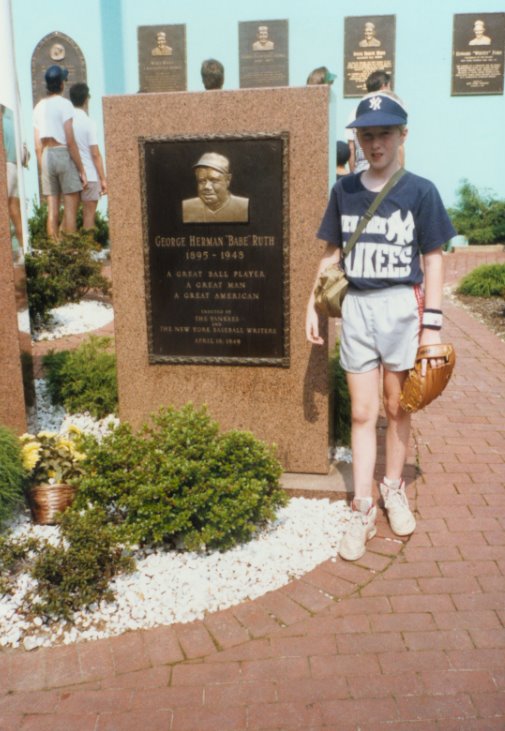
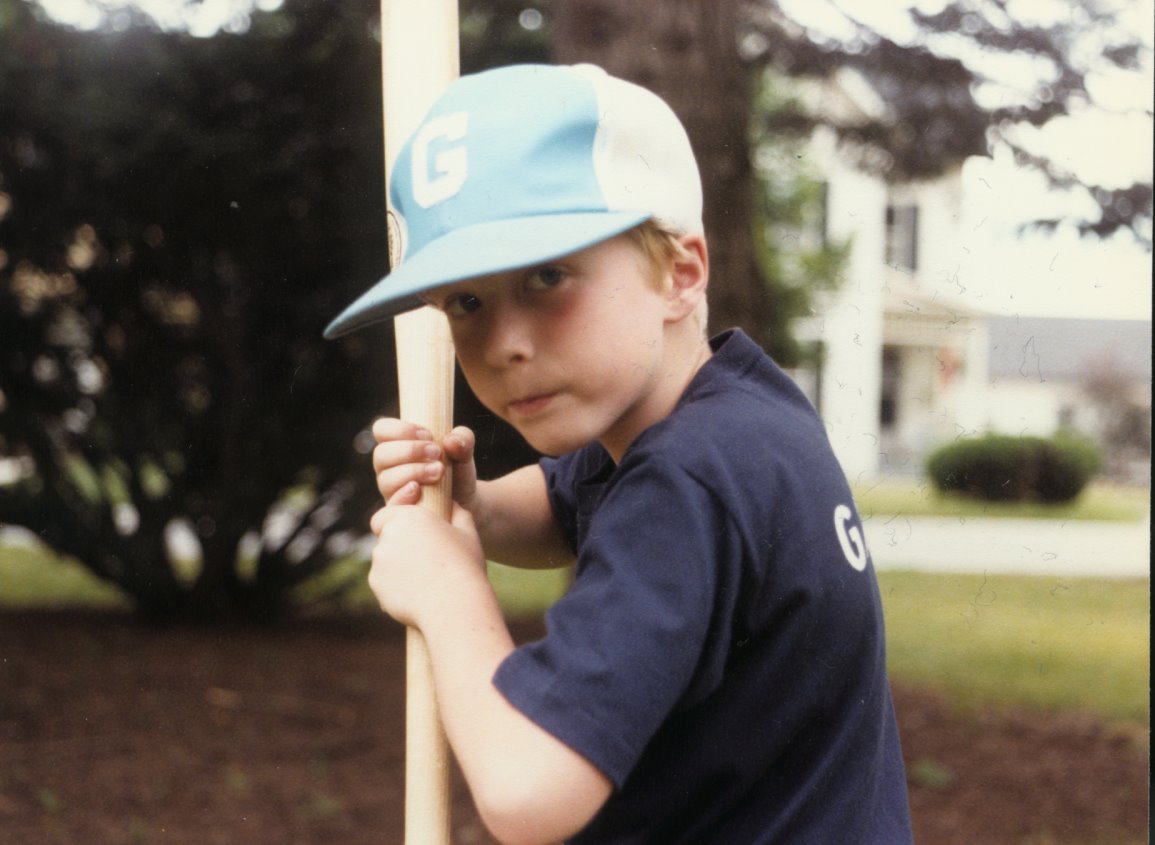
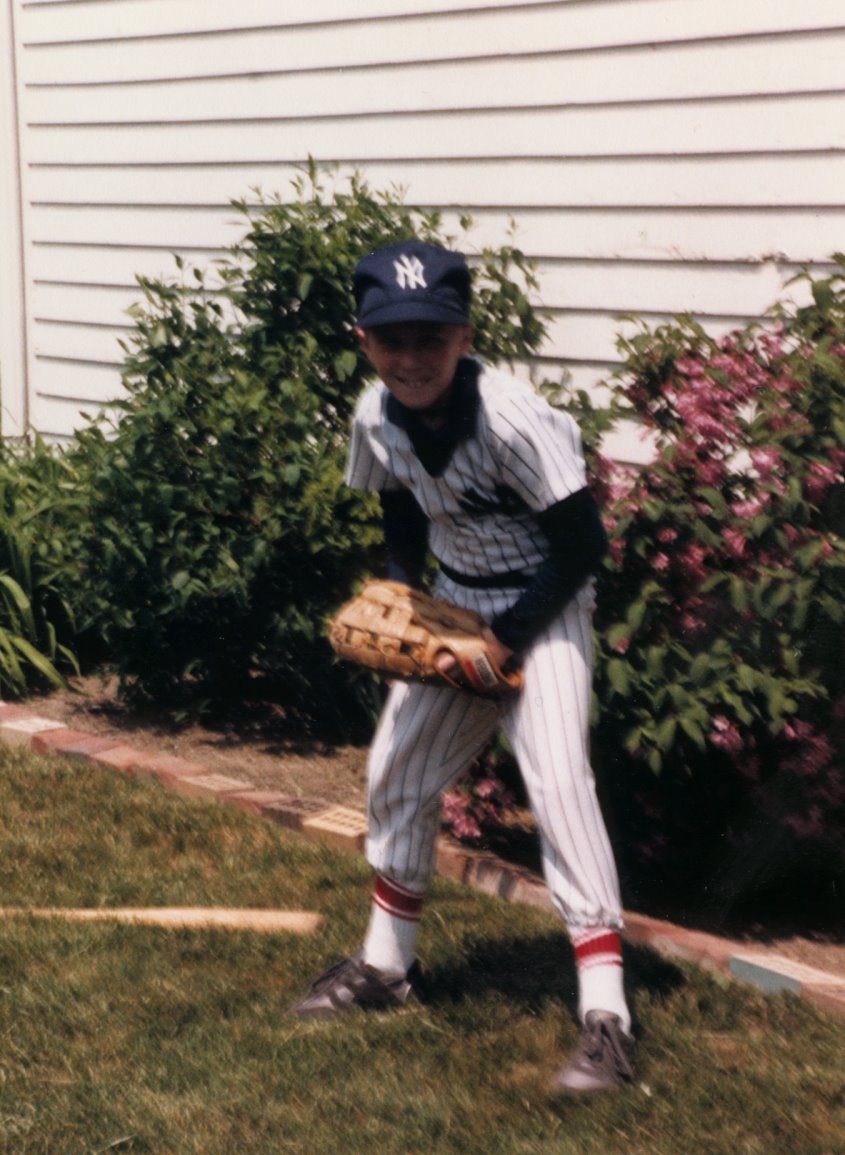
Back in the mid-1980s, like most single-digit-old, elementary-school kids, I developed a strong case of America’s pastime. I’m pretty sure I joined Little League in 1985 simply because it was the thing to do, and when you consider my team’s 3-year record of 3-45, it’s remarkable to think that I’ve stuck with the game for so long. Not only did I stick with it, though, I also grew to love it, both on the field and off.

Around the same time that I learned how to play baseball, I began to take interest in watching it. I can still remember, with the kind of clarity that hardly ever accompanies a nearly 25-year-old memory, sitting in front of my grandparents’ television in 1984, watching the Oakland Athletics play, and seeing their speedy outfielder Rickey Henderson steal second base and then run to third when the throw sailed into center field. I ran as fast as Henderson into the kitchen where my parents and grandparents were discussing parental/grandparental things and proudly declared that Henderson was my new favorite ballplayer. In the winter months, when Henderson was traded to the New York Yankees, I declared that the Yankees were my new favorite team. But let’s be honest here: my heart ultimately would have led to the Yankees regardless of their roster. Like my father and his father before him, the Yankees were in my blood.

When my grandfather discovered my new love for his old team, it was like if the day you realized you loved candy coincided with the revelation that your home had a chocolate pond in its backyard. Suddenly, I was receiving hand-me-downs of the Yankees Magazine, I was going to an actual Yankees game with him and my father, and the sounds of a ballgame could be heard coming from the back room in his house nearly every time we visited. The games were on so often that I wouldn’t have been surprised if the letters “WPIX” had burned themselves into the screen. The Yankees were in my blood, yes, and my grandfather ensured that it would stay that way forever.

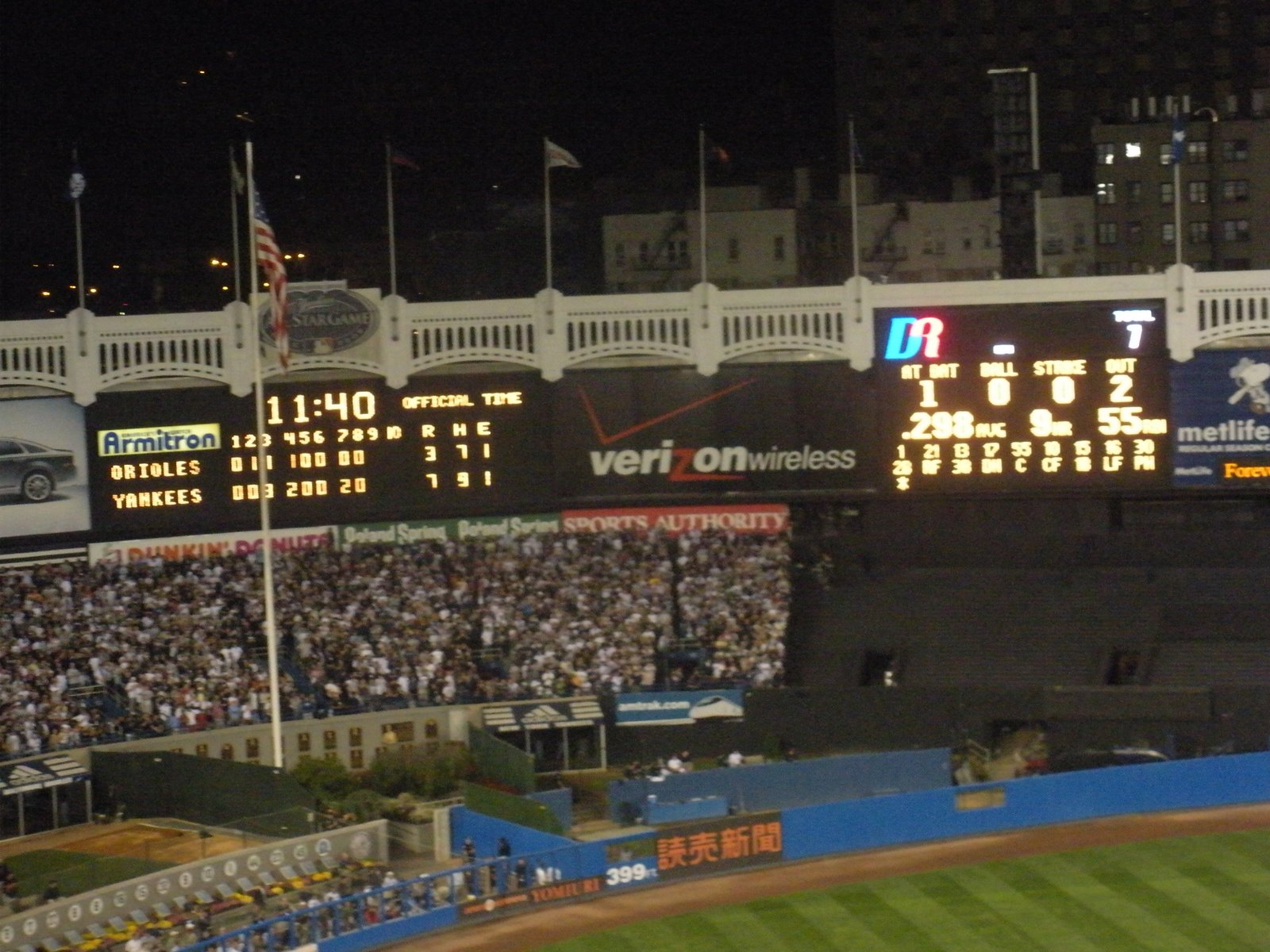
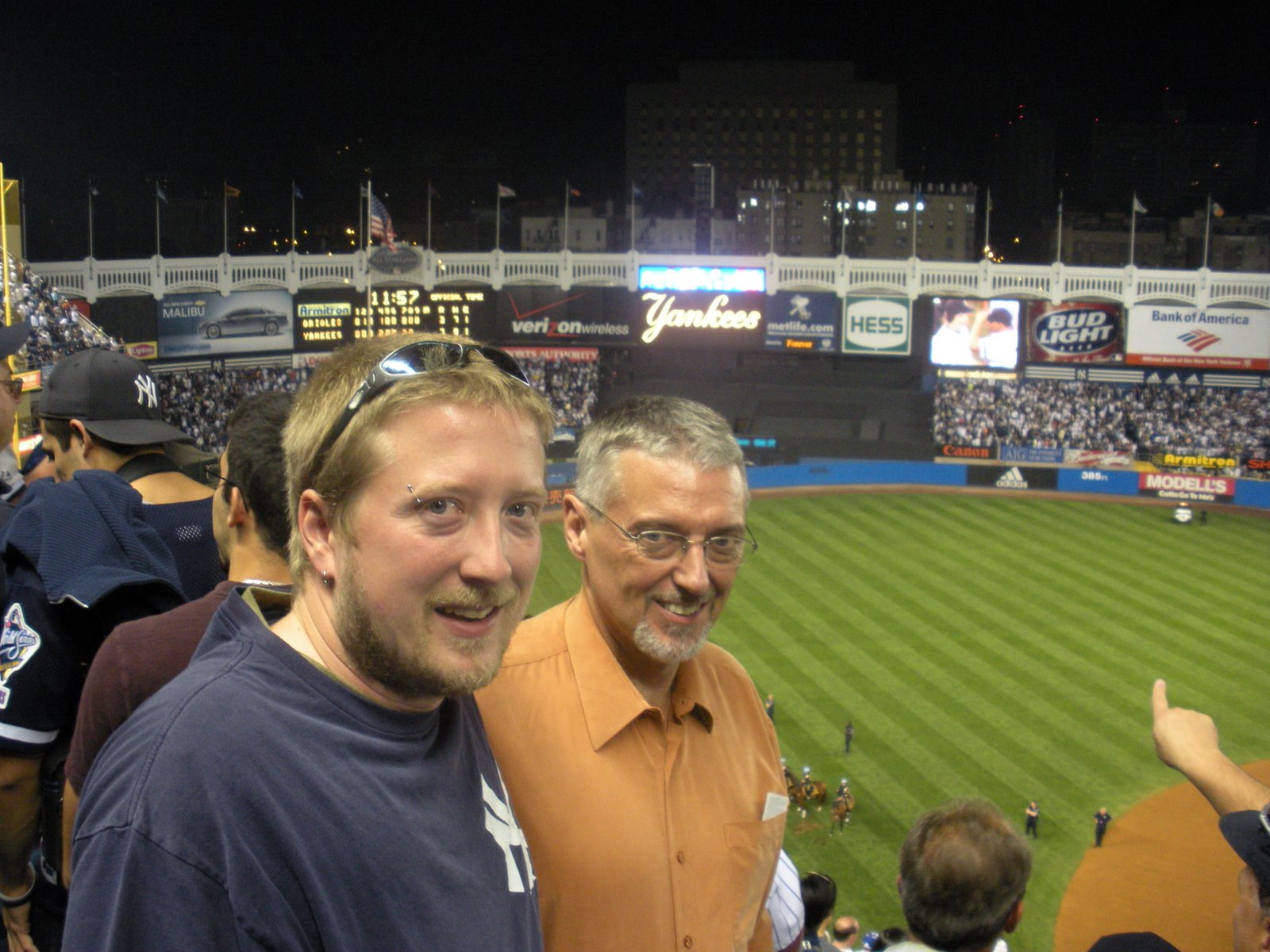
As some or all of you know, Papa Benchly and I made a bittersweet pilgrimage to Yankee Stadium this past Sunday, the last day of summer. It was sweet because this was the first Yankees game that he and I had been to together in approximately 20 years. It was bitter because the Yankees had all-but-mathematically been eliminated from playing in the postseason for the first time since my senior year in high school. It was sweet because the pre-game ceremony paraded out a long list of Yankees, including two of our heroes: Yogi Berra for me and Bobby Richardson for him. And it was bitter because the ceremony had been planned to honor the final baseball game to ever be played in the cathedral, which can now, three days later, be referred to as “the old Yankee Stadium.”

The flags atop the white frieze that helps to envelop the fans within the Stadium, sat motionless in the warm, summer’s night; if the ghosts of the building were going to have their way, we’d have to wait another day for the end of the seasons, both baseball and summer. Papa Benchly and I sat in the upper deck on the third base side (in about the same spot as where the entire Benchly family sat in 1987 when Papa Benchly and I were convinced by Mama Benchly that bringing the entire Benchly family to a Yankees game was a “good” idea [considering Sister #2 probably only remembers the music she listened to on her walkman, and Sister #1 probably only remembers Don Mattingly’s butt, and Mama Benchly probably only remembers the incredible heat that forced us to leave the game early {!}, I think it’s safe to say that this wasn’t a “good” idea]). In the final game at Yankee Stadium, Papa Benchly and I sat in seats that originally cost 3 times as much as they did that fateful Benchly family day in 1987, and for which in 2008 we paid the scalper 10 times the face value: a price worth paying.

On the long and sunny drive down to the Stadium, Papa Benchly and I reminisced about past Stadium trips and how every trip culminated in a Yankees loss. We saw an Old Timer’s Day game, an Opening Day game, a doubleheader, an extra-inning game, and the game in which Don Mattingly extended his home-run streak, among, we’re pretty sure, many other games. And the Yankees lost every single one of them. It’s safe to say that this affected me. When the Yankees finally made it to the World Series in my freshman year of college, I turned down the opportunity to buy tickets simply because I didn’t want my presence to hurt their chances of winning. And when this losing streak was finally broken at an early-2001-season game against the Boston Red Sox, it required not one but two 9th-inning home runs to save the day. And, of course, that particular season marked the end of the team’s run of World Series titles so it could be argued that my presence at a regular season game changed the course of the postseason’s history. Needless to say, this was a curse my father and I hoped would be broken that night, but we understood: when it comes to baseball, the unexpected is expected.

For a long time, and including a previous post in this blog, I’ve been a fan of former baseball commissioner A. Bartlett Giamatti’s quote about baseball. He says we “count on it, rely on it to buffer the passage of time, to keep the memory of sunshine and high skies alive,” and that just when we need it most, “when the days are all twilight, it stops.” What I had never noticed until recently, however, was the rest of the essay from which this quote was taken, entitled “The Green Fields of the Mind.” In it, Giamatti expounds on his opening theory and how it relates to the illusion of eternity: “It breaks my heart because it was meant to foster in me the illusion that there was something abiding, some pattern, and some impulse that could come together to make a reality that would resist the corrosion; after it had fostered again that most hungered-for illusion, the game was meant to stop and betray precisely what it promised. There are those who were born with the wisdom to know that nothing lasts. I am a simpler creature, tied to more primitive patterns and cycles. I need to think something lasts forever, and it might as well be that state of being that is a game; it might as well be that, in a green field, in the sun.”

Anyone who has ever spent 11 hours in a car in one 24-hour span knows that the open road allows for the opportunity to get lost in your thoughts. And so it was that in between conversations with Papa Benchly, I found myself thinking about how my life had changed so much in 31 years while a building on a 5-sided plot of land had resisted corrosion and remained almost entirely the same. I couldn’t help but notice the differences: instead of being driven to the game, having my way paid for me, and discussing school and baseball, I drove us in my car, paid for my half, and found pleasure in our conversations about our family’s history, and baseball, and the upcoming election, and the economy, and the current Benchly family drama. 20 years later, while our relationship with one another had not changed, our relationships to the rest of the world had: I was now an adult, he was now a grandfather. And there we were driving to and from a landmark that, for my 31 years, had always been ready to serve as a backdrop to my life, and which, a few short hours later (after a long-overdue win), would no longer be available, and I realized that Giamatti was right: nothing lasts forever. Stadiums. Baseball. Youth. Life. And the only comfort I can find is that of a green field in the fading sun.

"She fades just out of sight so there isn’t any sweetness in the dreaming…"

When I was 14, I went on a weekend church retreat with Sister #2 and Papa Benchly to a tiny white church in a small town in southern Vermont. Before we left home, Mama Benchly had received word from her brothers that their father, my grandfather, was most likely on his deathbed. For a few hours, we tossed around the idea of staying home but then decided to leave with the understanding that if anything happened, we would come home right away.

Around 9 p.m. that first night of the retreat, while I was seated at a table joined with others to form a half-circle, the church office phone rang. One sound I can assuredly say is unlike anything I’ve ever heard, is the sound of a phone ringing in a hollow church on a quiet, small-town Friday evening. It’s so loud, you almost expect it to be God. The person who answered the phone said it was for Papa Benchly and in that split second, I knew who was on the other end of the phone and why. And to this day, I can still vividly recall Papa Benchly’s calm, yet pained expression as he passed by me and my sister on his way to answer the phone; and Sister #2’s fearful and sad expression, too; and I can still feel in my stomach the feeling of anxious dread I felt that night. It’s a feeling that accompanies any inevitable news of death, and it’s a feeling I felt when I woke this morning.

I first met Hypothetical on a Saturday morning in February when Montana Girl and I ventured into a Main Street consignment shop called Pam’s Place. The three of us were the only customers in the store that hour. Montana Girl took me there to search for her Mardi Gras parade costume; I went on the off chance I would find a cool outfit for an upcoming date with Peeps.

After a few short minutes of browsing through a depressingly small men’s section, my “Cute Girl Radar” sent urgent signals to my attention and moved me into a position where I could see Hypothetical. As Sarah the L and I like to say, she was “wife cute” (aka, on a strictly superficial level, someone I’d feel comfortable waking up next to for the rest of my life). She was wearing jeans and a grey, knee-length, pea-coat-like winter jacket, and her hair and make-up suggested she was in control of her life. She overheard my conversation with Montana Girl and took the opportunity to point out leather pants that might work with the parade outfit. While she paid for her clothes and as she left the store, I made a point of remembering her name; I can’t explain why except to say I felt like I’d be using it again someday. And I did.

In early March, the determined folks in the world of fate pushed Hypothetical into my life again and this time, I didn’t let her go. What followed were intense dreams and promises and kisses and smiles and text messages and hopes and hugs and cuddling and passion all rolled up into one big unhealthy fast start. And slowly, but surely, as is often the case when you mix ingredients out of order or too quickly, the flimsy foundation we had built began to crumble as we silently realized that our true personalities, though both drenched in heartfelt sincerity, were not a perfect match for one another. The death of us was inevitable and for the best, and yet I couldn’t help but fear it.

This morning, Hypothetical made official what we had unofficially felt in our hearts for awhile. And as I sit here pondering all the wonderful memories I’ll have of Hypothetical and succumbing to the tears that accompany the painful memories I won’t be able to ignore, I’m reminded of a conversation CP, Sarah the L, and I had about the superpowers we would each choose to possess if given the chance. Sarah said she would be Super Leap-Tall-Buildings-In-A-Single-Bound Lesbo-Loving Telepathic Chick, thus giving her the power to read the minds of lesbian, Empire State Building sightseers. CP said she wanted to be Super Flying Leper-Healing Invisible Woman, allowing her the opportunity to heal people and to be invisible and fly away if “the lepers got out of control.” I said I wanted to be Do-Over Man, not to be confused with Dover Man, the invincible capital of Delaware! I would have the ability to go back in time to correct my mistakes.

And so, as I file this Hypothetical chapter away, I can’t help but wonder one last hypothetical question. What if I never saw Hypothetical after Pam’s Place? What if I could go back in time to make it so our story ended the way it began?: Hypothetical left Pam’s Place. Montana Girl purchased the leather pants, I resisted the temptation to buy a cheap wine rack I didn’t need, and we left the store, heading up Main Street. On our walk to the Church Street Marketplace, Montana Girl turned to me and said, “where to next?”

Anyone who knows anything about me understands that very few words come out of my mouth without careful consideration for how they convey some sort of ironic or genuinely meaningful symbolism. Sometimes it’s blunt, like my “Hypothetically…” posting last month, and sometimes it’s subtle, like the last paragraph in each section of my “Song of My Anecdotal Self, Volume II” posting last week. So it will come as a shock to most all of you when I end this posting in a tone lacking any subtle symbolism:

Hypothetical’s departure from my life hurts like hell. I want the pain to go away and I don’t think it will for awhile. But, if given the chance to go back in time to take away this pain, if I could be Do-Over Man for one day, I wouldn’t trade away one star-crossed minute with her for anything. She made me smile more than most. And I’m thankful for her.

It sucks to be me

I’m about to contradict the mood of my previous posting so bear with me…

Mama Benchly is a bit of a drama queen. And if you tell her I said that, I’ll forever deny it. She has a tendency to make situations in life seem more traumatic or intense than they really are. She’s the one who, during the Cold War, when asked if our family could build a bomb shelter, sat down on the porch with her two youngest children (I was 9 at the time) and said, “if there’s a third world war, life wouldn’t be worth living so our family will sit out here on the porch and wait to die.” She’s also the woman who treats every goodbye as the last goodbye, even if you’re just leaving the room to go to the kitchen. You’ve probably noticed by now, from the extremes of my blog postings, that I’ve inherited the same emotional genes as my mother.

A little over a year ago, I met a woman named San Fran Girl (long-term friends of mine will notice I’ve dropped a certain adjective from her nickname). Emotions between us became very intense very quickly, so much so that, within weeks, we had purchased plane tickets for a week-long vacation in San Francisco. And unfortunately, this trip turned disastrous when the pendulum of our emotions swung unexpectedly to the other extreme. When the roller coaster came to a complete stop, I was torn apart by what amounted to only a 3-month experience.

I took quite a bit away from my brief encounter with San Fran Girl, but what impacted me more than anything else was my new mindset that I plagiarized from a souvenir button I purchased while San Fran Girl and I were in New York City to see the Broadway show Avenue Q: “It Sucks to Be Me.” After our falling out, when I felt like life couldn’t possibly get any worse, this $5 button, purchased to support various charities, seemed to perfectly summarize my woes. She dumped me? It sucks to be me. My car died? It sucks to be me. I’m frustrated with my job? It sucks to be me. I ride the Loser Cruiser? It sucks to be me. I wore the button like my Scarlet Letter of Rejection. And for nearly a year, I believed its message.

Last month, I pinned my “It Sucks to Be Me” button on one my traveling bags and headed off to the airport for the first leg of my Ultimate Road Trip: New Orleans (URT 2). After numerous delays, no guarantee that the flight would take off, and the Near Death Experience airline representative saying “if the flight doesn’t take off tonight, we can’t get you on another one for 6 days,” I decided my only option was to get a full refund, rent a car, and drive to Long Island where the URT 2 was set to begin in just 12 hours. I drove the 6-hour trip on one cup of coffee, one cup of hot chocolate, two sodas, and one and a half tanks of gas. My thought at the time: it sucks to be me.

And then the URT 2. Our below-sea-level room flooded during the pseudo-tropical storm and drenched half of my clothing; halfway through the trip, my college friends and I all realized that maybe a week was too long to spend in each other’s company; half of my time-alone day was spent in the hotel room because of the rainstorm and the other half was spent outside and drenched because of the rainstorm; I ran out of money two days before the end of the trip; our swamp tour lacked all wildlife except the occasional and inaudible (English?) comments from our is-he-taking-a-nap? tour guide Glenn; we drove through the night to get home and I woke up in the backseat early in the morning fairly certain that I was the only person awake in our car; I was dropped off near the Brooklyn Bridge at 7 a.m. with no certain idea of how to get to Manhattan; I took the wrong train, which ultimately put me in Harlem; and my full refunded plane ticket meant I didn’t have a return flight home and thus, had no sure way of getting back to Vermont. But for the first time in nearly a year, my thought process wasn’t blinded by the easy-explanation-button. It didn’t suck to be me and here’s why:

Despite the room flooding, I had a roof over my head and (though dirty) dry clothes on my back; I realized that although my college friends and I were spending too much time together, we were dealing with it and making the best of the situation, thus showing the maturity we had gained since college; I spent a day alone in a big city, which is something I never would have had the courage to do a year ago; one of my friends lent me money trusting that I would pay her back in two days; unlike the obnoxiously loud motor boat rides, our swamp tour was in a canoe(!) and I got to paddle(!); we drove through the night to get home and how many people can say they drove from New Orleans to NYC in 23 hours?; despite the short detour, I ultimately arrived at Mia Wallace’s Manhattan apartment where I had a warm bed, a hot shower, and a great friend to keep me company for the day; my trip ended thanks to the 4X100 relay team of the Metro North, True, Sister #2, and Brother-in-Law #1 who all took time out of their days to ensure that I got home safely.

As the Metro North train approached the Connecticut station where my friend True was waiting to pick me up, and as I approached the exit, the traveling bag on my shoulder caught itself on a train seat. In my effort to free the bag, I ripped off the It Sucks to Be Me button, which fell to the floor. With enough time to pin the button back on my bag, I bent down, picked it up, and placed the souvenir in my pocket.