A Flawed Life

I remember getting into an argument with Mama Benchly when I was 7 or 8 years old and tantrums were the logical and normal choice of attack. The tantrum most likely occurred after Sisters #1 and 2 refused to include me in whatever it was they were doing at the time, as was their right and responsibility as older siblings. I pleaded with my mom for her to have one more child and to please make that child a boy. I wanted a brother to play with and my childhood thought process was able to gloss over the fact that such an age gap would have meant that I would have ended up being the one refusing to include a younger sibling in whatever it was I was doing. Mama Benchly’s response was simple: she and Papa Benchly had decided that all of the complications associated with my birth had meant that it would be greedy and dangerous for them to try for more.

Seven or eight years earlier, Mama Benchly was gardening in our family’s Champlain, NY yard one summer evening when her water broke. After rushing to the hospital 30 minutes away, and after a labor that lasted just 90 minutes, I entered the world. At first glance, it seems like the picture-perfect, normal delivery; however, a second glance shows that I gave them a scare by wrapping the umbilical cord around my neck as well as by having an irregular heartbeat. Add to that the fact that I was born with one less pectoral muscle than the normal baby, as well as the fact that a few short years later, two toes on each of my feet would have grown overlapping each other if it wasn’t for corrective surgery, and my parents understandably saw the warning signs written on their son’s pectoral-less flat chest: try for more and you might not be as lucky.

As you can imagine, considering how desperate adolescents are to fit in with the crowd by not sticking out of it, I had a difficult time coming to terms with my pectoral deformity. Though I always loved gym class, I dreaded changing into and out of my clothes in the locker room where I ran the risk of being exposed as a deformed imposter posing as a normal kid. (I’ve still mostly blocked out of my memory the times in gym when the instructor made our teams play “shirts and skins.”) And to be honest, finding peace and comfort with my deformity has been a lifelong struggle against which I often find myself losing. I’m still hesitant to remove my shirt in public, and while it took quite a bit of trust for me to reveal the deformity to past girlfriends (again, it speaks volumes about the kind of woman my future wife is, that I felt comfortable telling her about it on our third date), regardless of how much I’ve trusted my close friends, it’s 33 years after my birth and most of my readers (read: friends) will be hearing of it for the first time in this blog post. I imagine Sarah the L didn’t even know about it. So considering my age, it’s ironic to think that it took a juvenile insult thrown my way from an adult posing as an adolescent to help me come to terms with my deformity.

Like most kids in my generation who grew up loving baseball, trading baseball cards, and memorizing the statistics on the backs of said cards, I became an adult who finds pleasure in playing in a fantasy baseball league each year. And thanks to Mr. Extracurricular, I’ve had the pleasure of playing in a locally-based league for the past two years (complete with a live draft! [I know how this sounds, so don’t bother telling me]). We expanded the number of teams this year and in doing so we welcomed aboard a few friends and some friendly strangers. One of these strangers (for the sake of rhyming anonymity, I’ll call him Brat) beat a returning team in the first week of the season and then bragged about it on a message board (the fantasy baseball equivalent of trash talk). This week, after my team beat his team in what can only be described as a “thrashing,” I felt compelled to defend the aforementioned losing team’s honor by returning the trash-talking favor (word for word the way he had done so 4 weeks earlier). Brat responded by saying he wasn’t going to listen to someone who didn’t even have a pectoral muscle. Oh. (You see, evidently, Brat is friends with my exgirlfriend, she thought it appropriate to share this information with others, and Brat considers physical deformities as appropriate punchlines.)

Instantly, I was transported back to 8th grade swim class when one of my peers looked at my bare chest and asked me if a tractor trailer had plowed into it (I’ll give him retrospective points for his creativity). However, unlike that afternoon and all of the uneasy years that followed, after Brat’s insult, I didn’t feel the urge to hide or be ashamed. Instead, I actually felt proud of my deformity because, 33 years into my life and I’ve finally realized that it’s my biggest flaw, and that rather than focus their attention on having one more deformity-free child, Mama and Papa Benchly instead raised someone incapable of poking fun at deformities; someone of whom they could be proud. I won’t pretend that I’m flawless, or even close, but I’d like to think that thus far, I’ve lived a life of which my parents could be proud.

I emailed Brat a few minutes ago and mentioned that I thought his personal attack was uncalled for. I also wished him well this season and mentioned my envy at his foresight in adding a certain pitcher to his roster. I don’t know if he’ll respond but if he does, hopefully it’s to talk baseball. Isn’t that the normal thing to do?

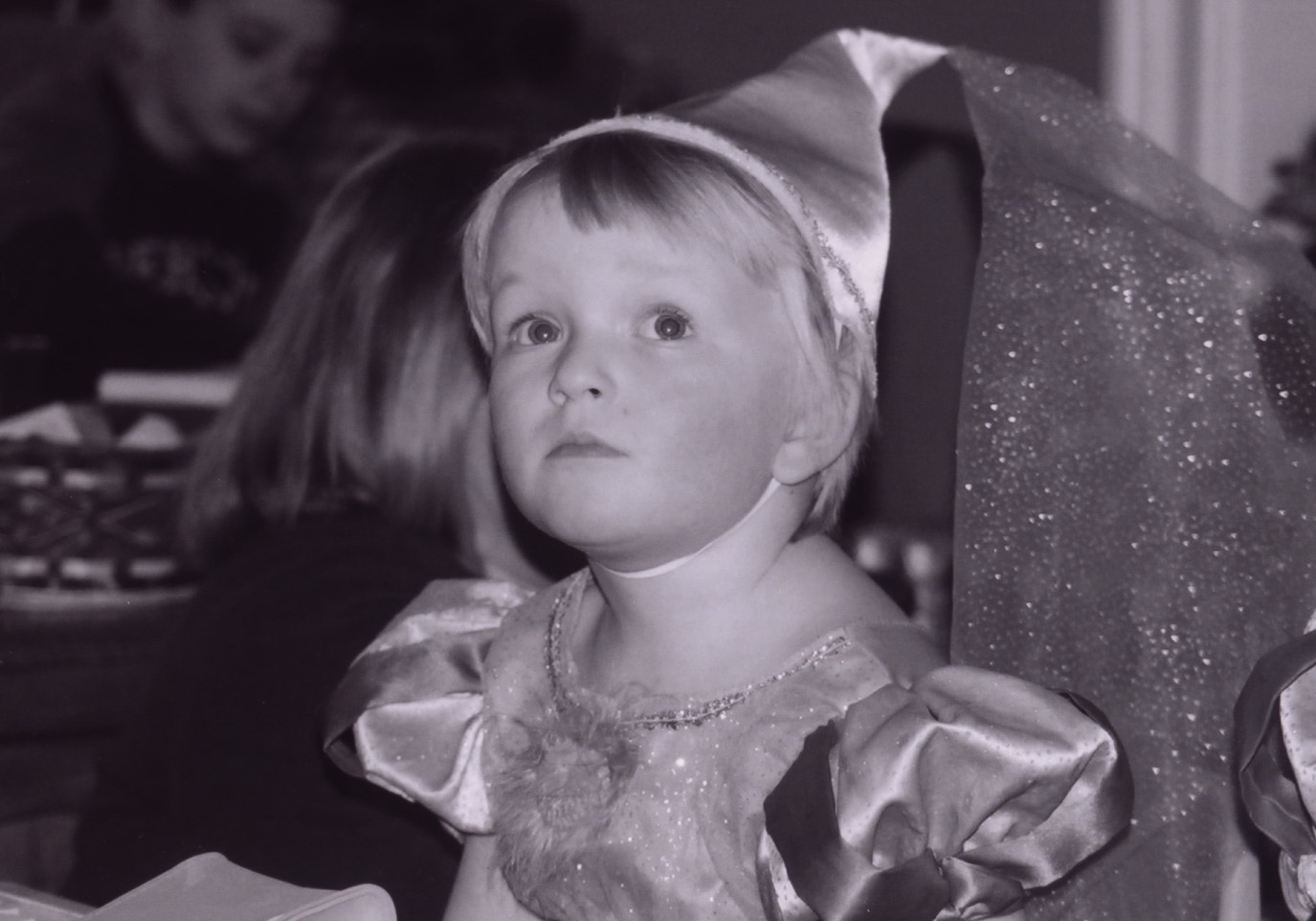
Ready or not…

The Benchly family likes to joke that I’m always the last one to know when something significant happens. For example, Mama Benchly told me once that one of my cousins had had a second child and I was surprised to hear that there had been a first one. And when Brother-in-Law #1 proposed to Sister #1 at a Thanksgiving with both of their families present, I was the only family member not in the room. It was for this reason that I made Sister #1 and Brother-in-Law #1 promise me that I would be the first family member to know if/when they got pregnant. And to this day, I still remember the giddy feeling I felt when my college roommate told me my sister had called and said it was imperative that I call her back that evening, which was eclipsed only by the giddy feeling I felt when she confirmed my theory: she was pregnant with Niece #1.

Ten years after finding out about the inevitable Niece #1, my nieces have multiplied by five, while the nephew count remains at zero, which, as far as I know, is where it will remain. (On a side note, I’ve always thought that if I was ever blessed with a family, that I’d only be able to bless my parents with more granddaughters. Of course, I also thought I was going to play for the Yankees so what do I know about my future?) Like Papa Benchly who has said he wouldn’t trade his granddaughters for all the grandsons in the world, I can’t imagine my life without my five nieces. Though the youngest is not yet two years old, each niece already has an established personality and I love to sit back and watch them learn their way through the world:

Niece #1 is a sensitive and curious leader who wants to love and be loved;

Niece #2 is determined and will make up her own mind about things thank-you-very-much;

Niece #3 is a tireless performer who probably loves to be tickled more than all the other nieces combined;

Niece #4 seems to have inherited traits of both of her sisters (#1 and #2) in that she wants to love and be loved but on her terms; and

I think it’s safe to say that Niece #5 will be running the family by the age of 4.

But as anyone with nieces or nephews will confirm, sitting back and watching is not an option. Aunts and uncles have important responsibilities and, ten years into my role as Uncle Benchly, I’m convinced that mine are to love unconditionally and to tirelessly entertain. The loving unconditionally part was easy: these girls were my first experience with instant unconditional love; they opened their eyes, I was in love. As for the entertaining part, my résumé includes helping Niece #1 learn how to play chess, taking Nieces #2 and #3 for a spin around the pool, watching Niece #4’s already obvious soccer talents, taking Niece #5 on my famous Uncle Benchly Airplane Express (complete with propeller sounds and arm wings), hundreds of board games, countless games of tag, and scavenger hunts, among many other activities including, I’m convinced, the most rewarding game of Hide-and-Go-Seek known to any niece or nephew in the world.

Whenever one or more nieces is gathered, it isn’t long before a game of Hide-and-Go-Seek is suggested. The rules are simple: everyone takes turns and we usually keep the hiding to one floor. So why is this game so rewarding for the girls? Simple. Because once a niece starts counting (hopefully to at least 20), despite my 6’2” Benchly frame, I squeeze myself into hiding spots in which no child would ever dream of fitting. And I stay there. I stay there despite the pain that, at times, has led me to tears; despite having to go to the bathroom; despite my nieces announcing that they’re giving up searching for me; and even despite the times when my nieces actually gave up searching for me. Occassionally, to keep their interest, I’ll wait until they’re in another room and I’ll shout out “I’m in here!” And if I feel that they’ve become more discouraged than a game for children should ever make a child feel, I’ll quietly leave my hiding spot and “hide” in plain view. After I’ve been discovered, I’ll convince the niece that I’ve been hiding there all along.

There have been times when my uncle tricks haven’t worked as well as I had planned (e.g., if Niece #4 or Niece #5 saw me hide and give away my hiding spot by staring at me and giggling), and there have been times when my nieces have shown that they’ve sadly lost some of their naïveté (e.g., when Niece #1 refuses to believe that I’ve been hiding in plain view the entire time), but for the most part, as long as I have enough time to hide, I have no trouble entertaining them with memorable hiding spots. Of course, how many children are capable of counting slowly when they’re overcome with excitement? And so, often times, they’re shouting “ready or not, here I come” when I’m obviously not ready. But as in life, when things happen before you’re ready for them, it’s in how you respond that determines your fate and so, with this in mind, I sprint and leap and shove myself into the best hiding spot available and hope that I don’t stub my toes along the way.

"It ain’t over till it’s over."

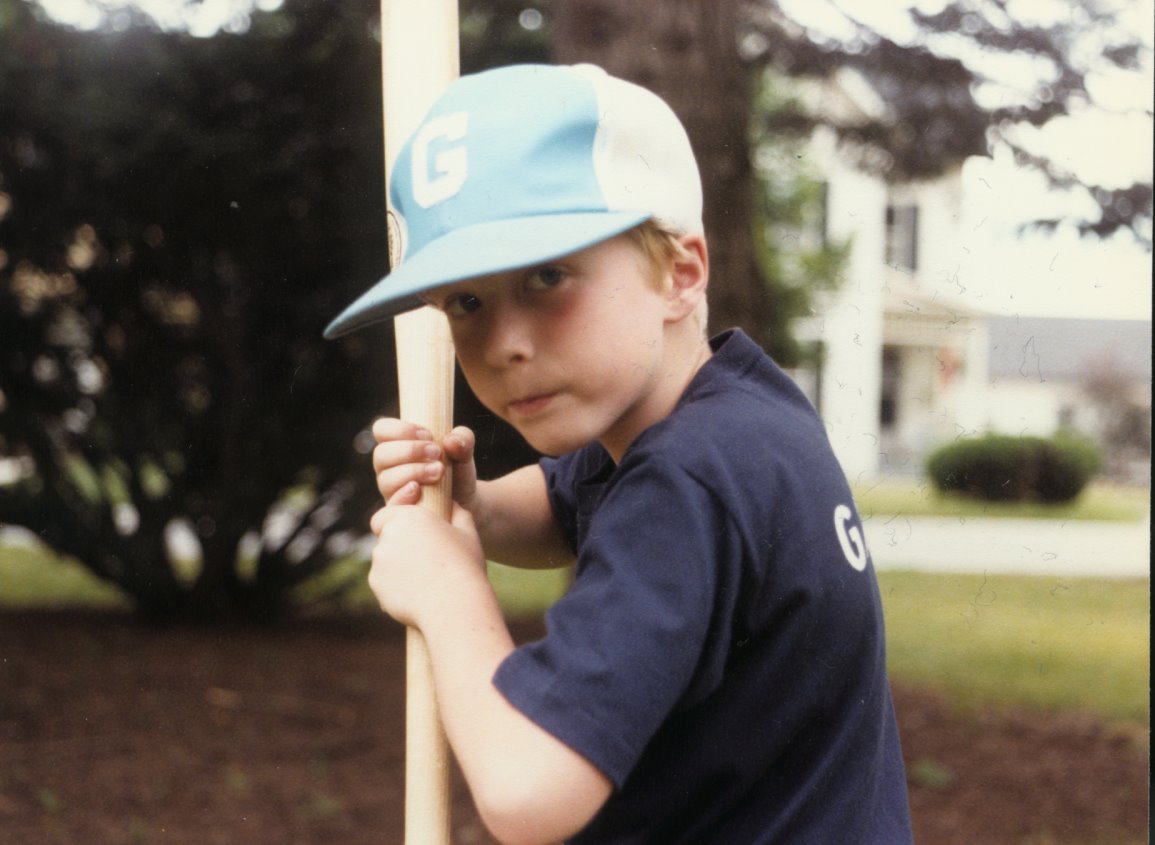
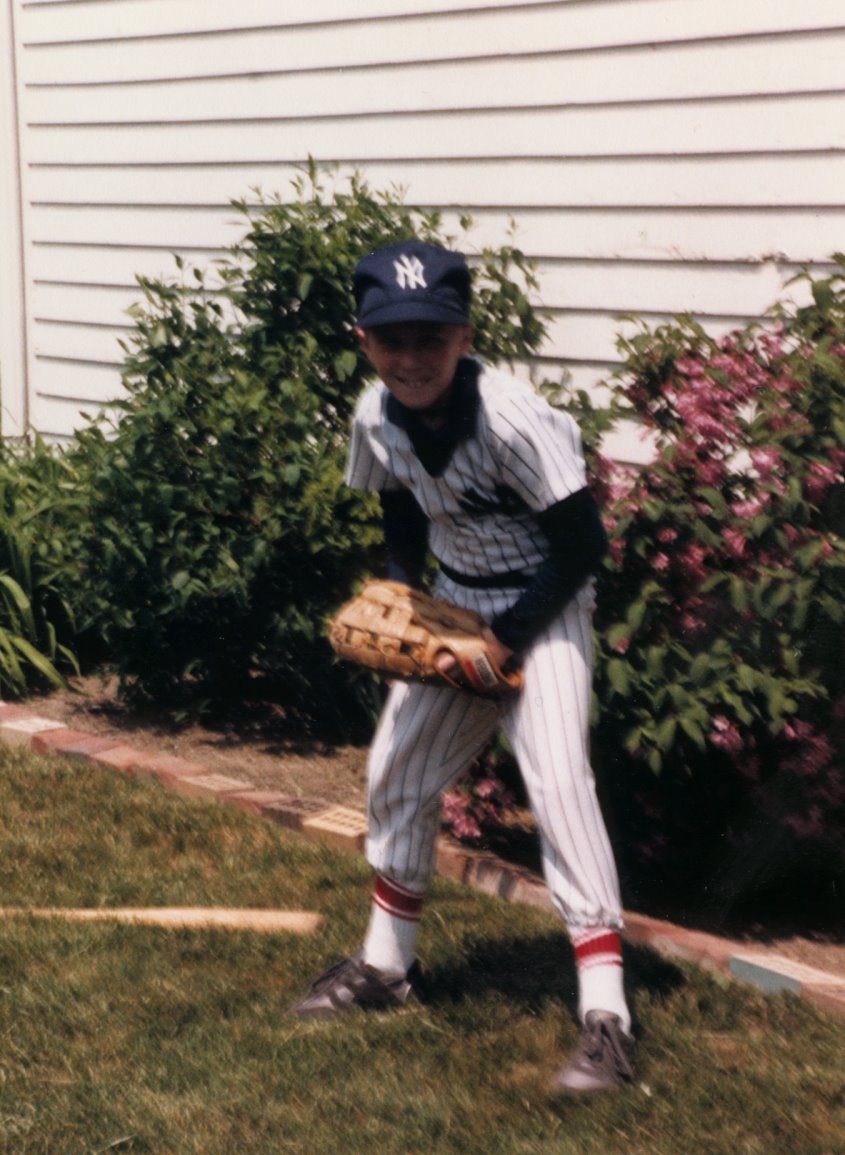
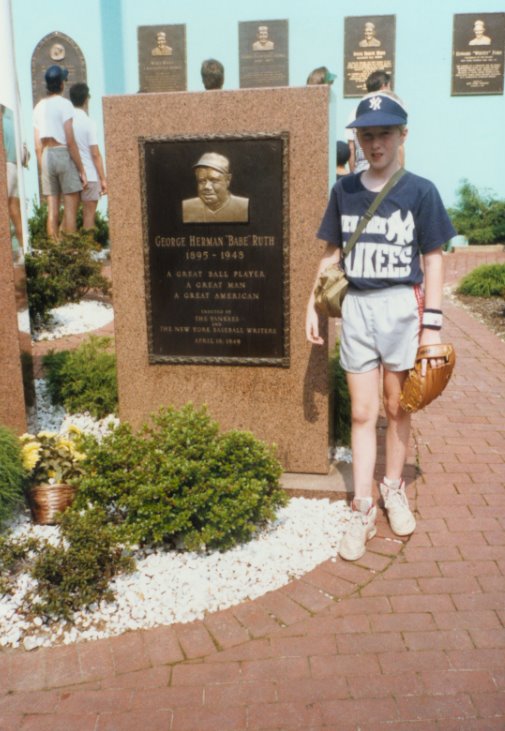
Back in the mid-1980s, like most single-digit-old, elementary-school kids, I developed a strong case of America’s pastime. I’m pretty sure I joined Little League in 1985 simply because it was the thing to do, and when you consider my team’s 3-year record of 3-45, it’s remarkable to think that I’ve stuck with the game for so long. Not only did I stick with it, though, I also grew to love it, both on the field and off.

Around the same time that I learned how to play baseball, I began to take interest in watching it. I can still remember, with the kind of clarity that hardly ever accompanies a nearly 25-year-old memory, sitting in front of my grandparents’ television in 1984, watching the Oakland Athletics play, and seeing their speedy outfielder Rickey Henderson steal second base and then run to third when the throw sailed into center field. I ran as fast as Henderson into the kitchen where my parents and grandparents were discussing parental/grandparental things and proudly declared that Henderson was my new favorite ballplayer. In the winter months, when Henderson was traded to the New York Yankees, I declared that the Yankees were my new favorite team. But let’s be honest here: my heart ultimately would have led to the Yankees regardless of their roster. Like my father and his father before him, the Yankees were in my blood.

When my grandfather discovered my new love for his old team, it was like if the day you realized you loved candy coincided with the revelation that your home had a chocolate pond in its backyard. Suddenly, I was receiving hand-me-downs of the Yankees Magazine, I was going to an actual Yankees game with him and my father, and the sounds of a ballgame could be heard coming from the back room in his house nearly every time we visited. The games were on so often that I wouldn’t have been surprised if the letters “WPIX” had burned themselves into the screen. The Yankees were in my blood, yes, and my grandfather ensured that it would stay that way forever.

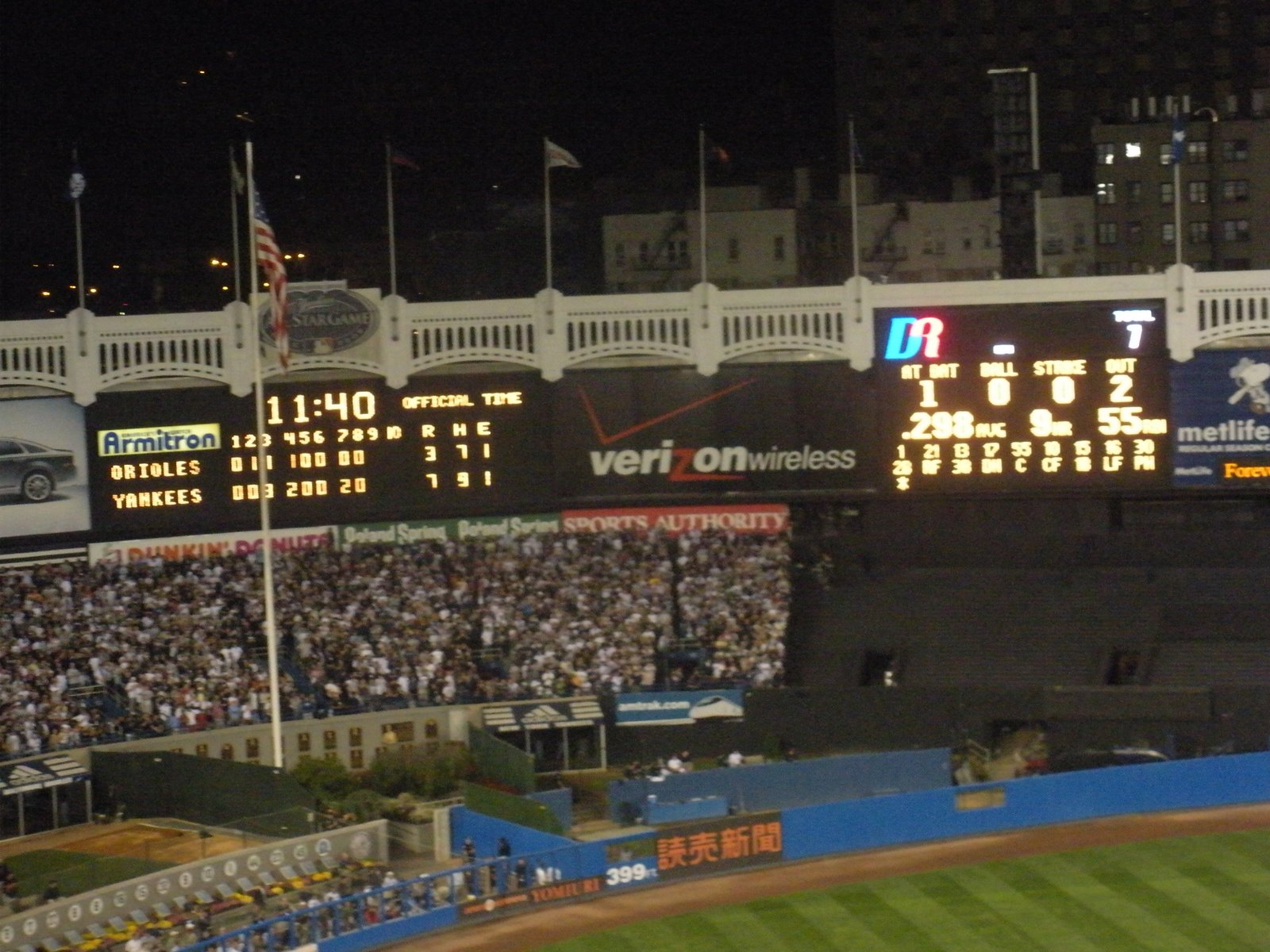
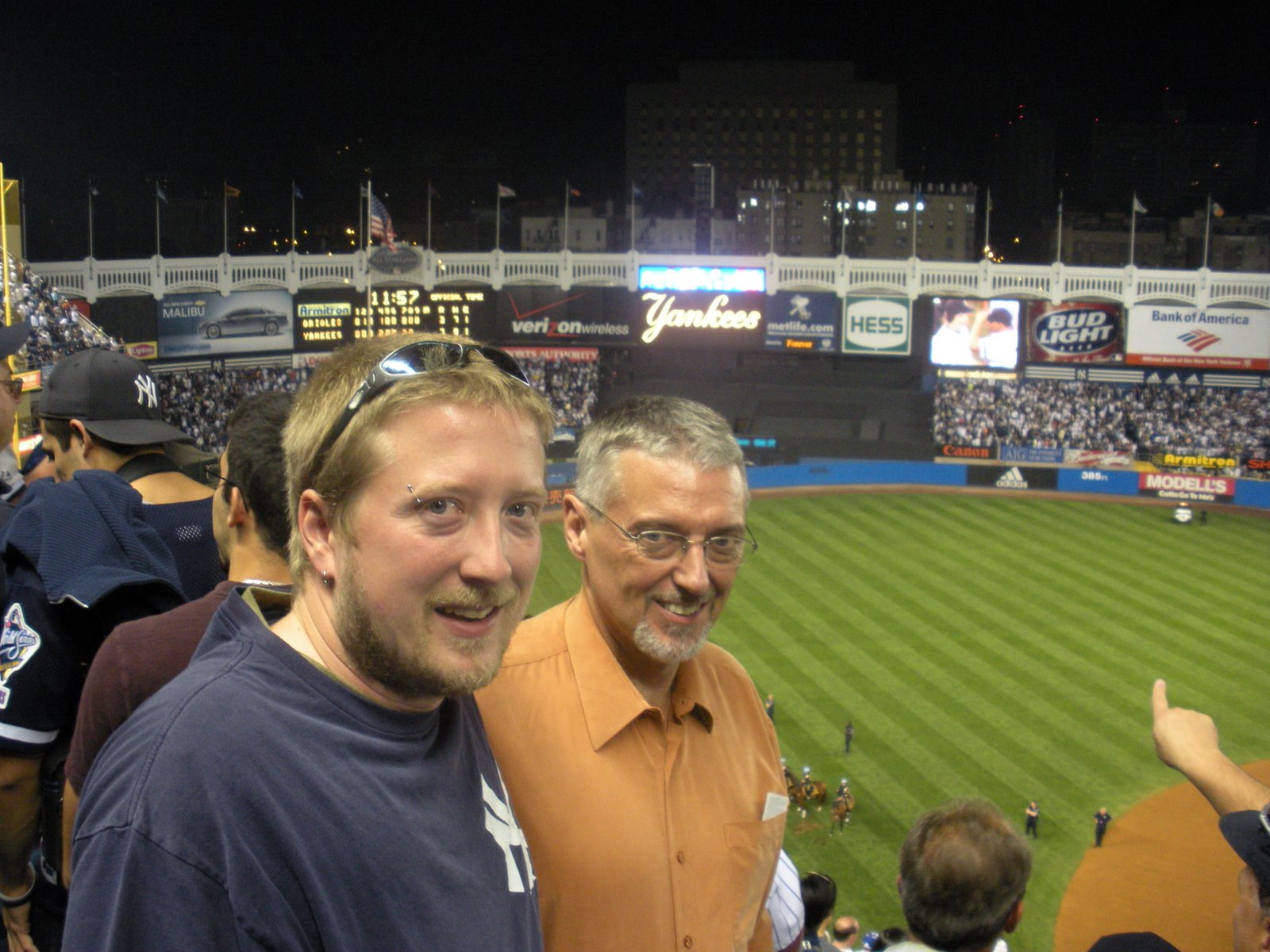
As some or all of you know, Papa Benchly and I made a bittersweet pilgrimage to Yankee Stadium this past Sunday, the last day of summer. It was sweet because this was the first Yankees game that he and I had been to together in approximately 20 years. It was bitter because the Yankees had all-but-mathematically been eliminated from playing in the postseason for the first time since my senior year in high school. It was sweet because the pre-game ceremony paraded out a long list of Yankees, including two of our heroes: Yogi Berra for me and Bobby Richardson for him. And it was bitter because the ceremony had been planned to honor the final baseball game to ever be played in the cathedral, which can now, three days later, be referred to as “the old Yankee Stadium.”

The flags atop the white frieze that helps to envelop the fans within the Stadium, sat motionless in the warm, summer’s night; if the ghosts of the building were going to have their way, we’d have to wait another day for the end of the seasons, both baseball and summer. Papa Benchly and I sat in the upper deck on the third base side (in about the same spot as where the entire Benchly family sat in 1987 when Papa Benchly and I were convinced by Mama Benchly that bringing the entire Benchly family to a Yankees game was a “good” idea [considering Sister #2 probably only remembers the music she listened to on her walkman, and Sister #1 probably only remembers Don Mattingly’s butt, and Mama Benchly probably only remembers the incredible heat that forced us to leave the game early {!}, I think it’s safe to say that this wasn’t a “good” idea]). In the final game at Yankee Stadium, Papa Benchly and I sat in seats that originally cost 3 times as much as they did that fateful Benchly family day in 1987, and for which in 2008 we paid the scalper 10 times the face value: a price worth paying.

On the long and sunny drive down to the Stadium, Papa Benchly and I reminisced about past Stadium trips and how every trip culminated in a Yankees loss. We saw an Old Timer’s Day game, an Opening Day game, a doubleheader, an extra-inning game, and the game in which Don Mattingly extended his home-run streak, among, we’re pretty sure, many other games. And the Yankees lost every single one of them. It’s safe to say that this affected me. When the Yankees finally made it to the World Series in my freshman year of college, I turned down the opportunity to buy tickets simply because I didn’t want my presence to hurt their chances of winning. And when this losing streak was finally broken at an early-2001-season game against the Boston Red Sox, it required not one but two 9th-inning home runs to save the day. And, of course, that particular season marked the end of the team’s run of World Series titles so it could be argued that my presence at a regular season game changed the course of the postseason’s history. Needless to say, this was a curse my father and I hoped would be broken that night, but we understood: when it comes to baseball, the unexpected is expected.

For a long time, and including a previous post in this blog, I’ve been a fan of former baseball commissioner A. Bartlett Giamatti’s quote about baseball. He says we “count on it, rely on it to buffer the passage of time, to keep the memory of sunshine and high skies alive,” and that just when we need it most, “when the days are all twilight, it stops.” What I had never noticed until recently, however, was the rest of the essay from which this quote was taken, entitled “The Green Fields of the Mind.” In it, Giamatti expounds on his opening theory and how it relates to the illusion of eternity: “It breaks my heart because it was meant to foster in me the illusion that there was something abiding, some pattern, and some impulse that could come together to make a reality that would resist the corrosion; after it had fostered again that most hungered-for illusion, the game was meant to stop and betray precisely what it promised. There are those who were born with the wisdom to know that nothing lasts. I am a simpler creature, tied to more primitive patterns and cycles. I need to think something lasts forever, and it might as well be that state of being that is a game; it might as well be that, in a green field, in the sun.”

Anyone who has ever spent 11 hours in a car in one 24-hour span knows that the open road allows for the opportunity to get lost in your thoughts. And so it was that in between conversations with Papa Benchly, I found myself thinking about how my life had changed so much in 31 years while a building on a 5-sided plot of land had resisted corrosion and remained almost entirely the same. I couldn’t help but notice the differences: instead of being driven to the game, having my way paid for me, and discussing school and baseball, I drove us in my car, paid for my half, and found pleasure in our conversations about our family’s history, and baseball, and the upcoming election, and the economy, and the current Benchly family drama. 20 years later, while our relationship with one another had not changed, our relationships to the rest of the world had: I was now an adult, he was now a grandfather. And there we were driving to and from a landmark that, for my 31 years, had always been ready to serve as a backdrop to my life, and which, a few short hours later (after a long-overdue win), would no longer be available, and I realized that Giamatti was right: nothing lasts forever. Stadiums. Baseball. Youth. Life. And the only comfort I can find is that of a green field in the fading sun.

Even Flowers Have Their Dangers

Sister #1 and her husband celebrated three additions to their home this year: their third beautiful child, Niece #4; a new 2nd floor bedroom, built to accommodate Niece #4; and a second full bathroom, built to accommodate a household with 4 females. On a whim, I visited their home last Friday night to see the new bedroom and bathroom, but mostly to see my nieces. As my visit came to an end, Sister #1 walked me down to my car. A minute later, Niece #1 came outdoors with a concerned look on her face as she told us that her sister, Niece #2, was getting scared because their mother had disappeared. Sister #1 assured Niece #1 that everything was OK, we said goodnight, and they retreated into their home as I drove away. In retrospect, I figured that, most likely, Niece #1 was the one who was scared because although she likes to look after her sisters, she was worried that no one was looking after her.

While visiting with my sister, we briefly discussed the local news, which, for most of my faithful readers, became national news last week: the disappearance and murder of University of Vermont senior, Michelle Gardner-Quinn.

After saying goodnight to her parents, who were visiting for Family Weekend, Michelle ventured downtown to meet up with her friends. When she couldn’t find her friends, and her cell phone died, she borrowed the phone of a considerate stranger. After failing to connect with her friends, the stranger was kind enough to walk her home. The video camera of a jewelry store captured footage of Michelle and her good-deed acquaintance walking up our city’s hill to her home. Nearly one week later, her body was discovered near a gorge 20 miles away.

As only my most loyal readers will note, my hometown has not been without crime, as evidenced by the Great Inga Beep the Jeep Burglary; however, in the time that I’ve lived here, I’ve honestly never felt anything other than a refreshing belief that this place is where I needed to be if ever I wanted a lost wallet returned to me or if ever I wanted to be the “victim” of a random act of kindness. And after reading and listening to every news report I could find, it became increasingly clear that this sense of security had been shared by most, if not all the residents of our small community. So as law officials do their best to put together the pieces of this tragic puzzle (having arrested the stranger on unrelated charges), it’s not without reason to say that the residents of our Queen City are doing their best to put together the pieces of their crumbled sense of security.

Considering my home’s close proximity to the events of this crime, I’m sure it’s no surprise when I say that my way of coping with this tragedy has been to reflect on my own life. Although my frustration with professional athletes who use the phrase “this puts things into perspective” surfaced yet again last week at the news of a professional baseball player’s death, I admit that I’m guilty of feeling these exact same thoughts regarding Michelle’s death; something like this really does help you remember what in your life should truly be valued, and what’s extraneous.

At the top of the list of values for me, as always, are my loved ones. And just as I instinctively drive slower and much more defensively when my nieces are in the car, I feel the need to protect them from the evil in this world. I want to take Niece #1’s hand and lead her back into her home and tell her that everything will be OK; she has her parents, and her sisters, and her uncle, and that’s all she needs. But as hard as it is to admit, that’s not what she needs. As her loved ones, we owe it to her to help mold her into someone capable of conquering the world; someone capable of making the right choices; someone capable of living a rewarding life. We can’t shelter my nieces forever because in the end, they will need to deal with the reality that I’m dealing with today:

That as much as I want to, I can’t rewind life like I can rewind the jewelry store camera tape. I can’t walk Michelle and the stranger back down the hill until they disappear out of the camera’s view. I can’t walk them back to the bar and make different decisions for Michelle. I can’t walk Michelle back up the hill to her loving parents. I can’t walk Michelle back into their outstretched arms so that she can hug them goodbye once again and know that everything will be OK.

The Stolen Child

Part I
Come away, O human child!
To the waters and the wild
With a faery, hand in hand

One piece of Benchly gossip I neglected to mention in my last entry is what my favorite Christmas present was this past year. As the wrapping-paper dust settled on another Benchly Christmas, Mama and Papa Benchly said, “Don’t forget. [Mr. Benchly] has one more present.” Considering there were no boxes left unopened, I was puzzled and my expression said as much. And it was at this point that everyone in the room turned in my direction and told me in unison that Sister #1 was pregnant. So yes, that’s right, faithful readers, if the fates have their way, Niece #4 will be gracing our presence in August.

It’s been a long time since my last entry. In fact, it’s been more than a month since my discussion of second cousins, and while I’ve been actively responding to other people’s entries, it can safely be said that I haven’t been keeping up with my fair share of the blogging. And for that, I apologize. I’d like to get back into the habit of posting at least two significant entries every week; I just need the will power to do so.

I think it’s fair to say that my relationship with Freckles has affected my writing. Before Freckles, I was lonely, miserable, and filled to the blonde-haired brim with inspiration for meaningful (read: misery-filled) entries. But after that fateful June day when Freckles charmed me by saying she was a “bad, I’m talking off-the-road bad driver,” my focus has been more on her and less on my writing. But I don’t blame her, and you shouldn’t either.

I think Sarah the L will concur with my assertion that writers are most productive in their bitter, heartache days than at any other time in their lives. Knowing this, my new goal in life is to cherish and focus on my happiness while simultaneously channeling the miserable emotions from my past for my writing. If I can find a balance between the two, I believe I’ll be able to be both happy and a good writer.

Fortunately or, more to the point, unfortunately, my life as of late has been filled with some negativity that has Inspiration written all over it. And so, consequently, in this first entry of the new year, I’ll be able to draw on emotions from the present negativity, rather than worry about experimenting with those from the past. But before the negative, first some positive because, as is often the case, there was a poetic quiet before the storm…

As some of my 5 or 6 readers may remember, my last entry described my excitement over the revelation that a member of my family was performing on Broadway. Well, thanks in whole to the unbridled generosity of Freckles’ family (both extended and immediate), 2005 ended with quite a harmonious bang. Following a limo ride from Pennsylvania into New York City, and a rewarding dinner at a fine Italian restaurant in the Broadway district, Freckles’ aunt handed us 6th row center seats to Spamalot (aka, my second cousin’s show). Both the show and my relative were amazing and although I’m slightly bitter that my cousin was a no-show at our last-minute-planned meet-and-greet after the show, I was excited when Freckles and I were able to score autographs from both Hank Azaria and David Hyde Pierce.

The remainder of our New Year’s trip to Pennsylvania was spent celebrating Freckles’ cousin’s engagement, eating a never-ending supply of delicious snacks and meals, fighting off the little cousins for time on the X-Box (and losing), shopping the outlets, and aiming my paintball gun at the freckled redhead wearing the bright red sweatshirt who was aiming her paintball gun at me. Not only did I discover that I can survive and prosper in a paintball game, I also discovered, thanks to a direct hit to my middle finger, that I won’t ever want to play paintball again. And then, as the sun began to rise on the new year, I stood on the beach and watched the ocean water of my life recede to the horizon at an alarmingly fast rate.

Part II
For the world’s more full of weeping
Than you can understand.

Some days, when I’m overwhelmed with the anguish that seems to have set up shop in my world, I can find ample solace in the promise of my sister’s unborn and uncorrupted child. Most days, though, this baby can be only what he/she should be: a sweet footnote to an otherwise tumultuous month.

After enjoying our four-day weekend, Freckles and I returned from our Pennsylvania trip unenthusiastically ready to take on the working world again. First thing Tuesday morning, we were greeted by our company’s president, who read a statement he had been assigned by his bosses to read. As it turned out, the statement was, in effect, our termination notice. The company that owned our company had decided to close shop, move most of the work to a sister company, and offer one-fourth of the workers jobs at a sister company. As luck would have it, Freckles and I found ourselves in the group of workers “traded” to another company. As The Doctor said, “I feel as though I just used my eighth of nine lives here.”

It’s an odd feeling, this feeling of survivor’s guilt at the site of 150 of your coworkers doing the Lay-Off March. These are people with families; some with very little education and/or limited skills who fear the world outside of this small Vermont town they’ve known their whole lives. And yet I still have a job. With that said, although my intentions are still to leave as soon as a better offer comes along, I won’t pretend that the predominant emotion I’ve felt the last month is anything other than relief at having this job on which to fall back. But even so, other events in the month have served as reminders that life is more important than the company from which your next paycheck is coming.

I mentioned earlier that anguish had seemed to lay its roots in my world. I think that that’s the gentlest way to describe the fact that, in the past month, the lives of three of my loved ones have been greatly affected by four instances of cancer. The best friend of one of my best friends lost her fight with cancer earlier this month. And in the past month or so, I learned that the fathers of three wonderful women in my life were diagnosed with various cancers. After looking on from a secondhand point of view, I’ve learned how incredibly helpless one can feel at the hands of this powerful and mysterious sickness.

Again, I think of my sister’s unborn child. When anxiously awaiting all the joyous moments of this soul’s life, it’s difficult to overlook all the heartache that awaits it, too. Why do we do this? Why is it our pleasure to bring children into a world of pain and suffering? It seems that for every child that fulfills her childhood dream of starring on Broadway, there’s one that begins to successfully enter her adult life only to discover a loved one at risk to exit it. But then. Then, there are unexpected moments in your life that bring with them such a clarity that helps you recognize how worthwhile your life is.

And so it was that I found myself in the passenger seat of a car driven by Freckles, shaken up after skidding off the road into a snow bank/ditch, checking to see if Freckles was OK, making sure I was OK, fighting off the inevitable shock to determine what needed to be done, and saying a silent prayer of gratitude for being allowed the opportunity to continue to share my life with someone so special. Yes, the world may be more full of weeping than a child can understand, but as you grow older, you begin to realize that it’s mostly filled with love.

I don’t want to grow up

This morning, Sister #1 sent me pictures of Nieces #1-2 proudly displaying their ballet outfits. I blinked. Evidently, sometime in the last year, my nieces became old enough to walk through the young child’s rite of passage into ballet class. I showed the pictures to Freckles who, after seeing how adorable they were, as well as the Barbie dream house in the background, declared her jealousy. I asked her if she was jealous of a 4-year-old’s life and she said, “Life was a lot easier when I was 4. Although it is all relative, so it probably seemed tough at the time.”

I know that Sarah the L will agree with a shout out to rival any southern-Baptist “amen!” when I say that I’ve been working at my current job for far too long. For awhile, I rationalized my immobility with a number of valid-only-on-the-surface reasons (read: excuses) such as, but not limited to, my love for Vermont, the mostly-unheard-of comforts of a well-paying editorial job in Vermont, and my desire to accumulate valuable years of publishing/printing experience. In all honesty, like a man paralyzed by his metaphorical and/or literal cement feet in a zombie dream, I was too scared to move; afraid of the unknown world of lesser-paying jobs and the chance that this was as good as it could possibly get.

A few years ago, I read an interview of a co-writer for the TV show, The Simpsons. He talked about the sense of accomplishment he bathed in every day because of the commercial and creative success of the show. And he expressed aloud his bewilderment at the decisions of some of his former coworkers to leave the show for a better opportunity elsewhere. “Don’t they realize that it doesn’t get any better than this show?” he asked. Stupidly, when rationalizing my decision to stay at my job, I silently cited this writer when asking myself the blindly rhetorical question, “Don’t they realize this is a great Vermont job?” More coworkers than I can remember have come and gone since I began working in my department and only recently did I begin to think of their departures in a different light than that shown by the writer for The Simpsons. Only recently did I begin to consider that my position at this company, though a decent job for Vermont, was not worth the pain its mind-numbing work and soul-sucking executives inflicted upon me. This year, I began to come to terms with my fears and actively seek other employment. At this point in my search, I’m considering leaving the state, and/or applying to graduate schools. In the mean time, I’ve decided to stay at my current job.

Like the ghosts of this company’s past who were stuck with the company until their dreams of leaving it came to fruition, I have begun to question management (who, from now on shall be known as Darth Vader) with questions that ring in a lack-of-trust tone. Due to a great moment of idiocy on my part that can be blamed on my apathetic history with this company, Darth Vader’s overly defensive, bitter, pretentious, and passive-aggressive responses actually shocked me. But of course! While Vader’s answers were caked with professional-speak icing, the underlying tone screaming at me at the top of its lungs said, “Who the hell do you think you are and where the f#*k do you get off questioning anything I say?” Vader’s point that I shouldn’t dare question her authority, driven into my heart with a rusty spike, reminded Freckles of Madison and his belief that, if left unchecked, power bred corruptness. Showing my less-intelligent side, Vader’s response reminded me of high school.

While it could never be argued that Darth Vader ever resembled the popular Plastic Girls of high school (a phrase I coined in college, which was subsequently stolen by Tina Fey), her recent display of “I’m better than you” authority-flexing elitism did. This resemblance was so evident to me, in fact, I wouldn’t have been surprised if she convinced the Geek Squad (aka, the IT Department) that it was their privilege to do her work, or if she gave an employee a compliment, only to take it back two seconds later with a cruel, sarcastic rolling of the eyes. And while I could have a field day with comparisons between Vader and the people in high school I resented the most, my loyal (and starved) readers will not be surprised when I instead veer seemingly off subject for an unclear but good reason.

One of my coworkers showed up to work today with her face beaten into a pulp by, I’m suspecting, her “loving” husband of many years. I guessed spousal abuse because, according to what Veronica Japanica told me many years ago, this was not the first instance. While she smiles and stands proudly by her man who I’m guessing, in her abused mind, is the victim, I cannot help but notice the similarities between this coworker and Kara Beth Borden, the 14-year-old Pennsylvanian girl whose boyfriend murdered her parents. Both have been abused in some way, both are assuredly confused by the pain that has accompanied what they thought was love, and both continued to stand by those that hurt them out of fear and shame (though, in Borden’s case, it may have been involuntary).

These similarities, coupled with the resemblance between Darth Vader and the Plastic Girls, have got me wondering: aside from the obvious change in responsibilities, is there really that much of a difference between adolescence and adulthood? Or, as Freckles put it, is a 4-year-old’s life just as tough as an adult’s? Relatively speaking, in terms of emotions, is there any difference between how you felt when your fellow kindergartners kicked you out of their clique because your Dukes of Hazzard car wasn’t authentic, and the resentment employees feel as they do the Lay-Off March by the desks of those who survived the cuts? Maybe there is no difference save our abilities to express our emotions in ways other than crying in a corner; though, come to think of it, as an adult, I’ve done that, too. I submit that there is no real difference and maybe, in our rush to grow up, we overlooked that fact.

Forever’s Gone Away

I don’t recall much from my high school graduation. I imagine that one of my pretty classmates spoke of cherished memories, another book-smart classmate predictably mentioned hard work and determination, and the winner of the popularity contest (read: class president elections) probably paraphrased the Army’s “Be All You Can Be” campaign while Boys II Men’s “It’s So Hard to Say Goodbye to Yesterday” played over the speakers like the hidden song on the soundtrack of our lives. One thing I do remember, though, is the sight of many of my classmates shedding tears as they mourned the closing of the latest chapter of their lives and, while most passed it off as a sadness for the inevitable loss of their trivial friendships, I suspect their tears had more to do with the fear of the unknown. For most of my classmates who were conditioned to follow the pack in a desperate attempt to maintain an appearance of normality, high school graduation brought with it a terrifying world where those who thought for themselves and embraced individuality advanced, and those who didn’t stayed behind to reminisce about the “Glory Days.”

As for myself, when my high school principal stood up in the unforgiving, sweltering school gymnasium heat that June day and announced to my class that we had finally graduated high school and were now officially free to do as we pleased, I followed his advice and left, looking back only once to get one last glimpse of the school I hated and the sheepish classmates I never knew. Maybe I was ahead of my time, maybe my older sisters had given me insight into my future, and maybe my experience in those four years was just that miserable; all I know is when I left high school, I knew that the best years of my life would be found ahead of me on a path I had yet to create, rather than on the paved road of high school I was leaving behind. What I never realized was how quickly those years would pass by me.

One of my high school classmates emailed me the other day to notify me of our impending rite of passage into a quarter-life crisis: the 10 year high school reunion; that stressful evening spent with the people you hardly knew, pretending that you want to know them now, and while silently hoping they care more about your life than you do about theirs. I haven’t officially decided whether or not I’m going to attend this once-in-a-lifetime event but I won’t lie, I probably won’t. Considering I’m in touch with all of the people from high school with whom I wish to have meaningful friendships, I just can’t find all that much to be gained from my attendance. Regardless, however, the invitation has left me amazed at how helpless the passage of time makes me feel.

This past weekend, I mourned the loss of another year of my life as I celebrated my 28th birthday. Freckles treated me to dinner Friday night and, though she’ll tell you otherwise, she cooked a delicious meal. She then joined me Saturday on a hike up Vermont’s second tallest mountain, Camel’s Hump, whose peak ranks in my top five all-time favorite spots in the state. Though our stay at the top of the mountain was cut short in order to make our dinner date on time, the feelings of accomplishment inspired by the magnificent views, made it well worth the climb. The hike down the mountain in the lightening storm made me second-guess our trip, however. On the other hand, Freckles, author of the constant barrage of reminders sent my way at how important it is to live in the present rather than dwell on the future and the “what ifs?”, was impressively calm as we descended in the rain, serenaded by thunder.

Saturday night, Freckles and I met up for dinner with The Benchlys, Sister #1, her husband, Niece #1, and Niece #2. The night, which appeared to be capping off a perfect birthday, nearly turned tragic when Mama Benchly began to struggle for air, her face flushed from fear and pain. While I was paralyzed by an anxious shock, my brother in law, a volunteer fireman, stepped in to take charge of the situation and quickly determined that her airway was blocked, not by food, but by the swelling from an allergic reaction caused by the mushrooms stuffed with crabmeat my mother had mistakenly consumed moments earlier. When a handful of hits from her inhaler provided little to no relief, my brother in law ran to the store next-door and returned soon after with Benadryl, an antihistamine often used to combat allergic reactions. Mama Benchly downed the Benadryl while an imaginary crowd of fraternity brothers cheered her on and shortly thereafter, her breathing began to improve.

While Mama Benchly’s breathing, though still somewhat pained, returned to normal, the evening’s lessons learned of the fragility of the mortal life put me in a thoughtful mood from which I have yet to emerge. Stated simply, my mother’s allergic reaction was the scariest sight I had ever witnessed in my short life, and, on a day spent celebrating the latest year of my life, it served to remind me of how quickly life can be taken from us and, as Freckles always says, that our lives are too short for us to spend much time worrying about the hundred different potential consequences of our actions.

And so here I sit 10 years after my high school graduation and four days into my 28th year, awaiting word from the representatives from another Vermont publishing company with whom I interviewed this morning. If everything goes according to plan, I’ll be offered this editing job, which will point my career in the right direction while allowing me more time to write. But if, for whatever reason, I failed to properly sell myself and my skills to the interviewers, I’ll be able to sleep at night because I’ll know that my life was too short for me not to have tried at all.

The Benchlys

In one of her songs, Ani DiFranco sings “we all owe our lives to the people that we love.” I was reminded of this quote a few days ago when Hypothetical and I were discussing how our interactions (both good and bad) with loved ones have molded us into the people we are today. It feels as though only the ones you truly let into your heart have the chance to alter your existence and they can do so by hurting you or loving you, or both. I’ll leave the loved-ones-who-have-hurt-me discussion for another day and focus simply on the ones who have loved me, and specifically, the ones who have loved me the most: my parents.

I spent the first 25 years of my life trying to understand Mama Benchly and began to think I never would. She purchases old photographs from flea markets, frames them, hangs them up on the wall, and devises a back story for each one; she once tried to convince me that cows could stand on hills because their left legs were longer than their right ones; the only care package she ever sent me in college contained a short note, a dozen washcloths, and nearly a pound of peanuts; and she has a dream catcher hanging in the rear view mirror in her car.

(For those unfamiliar with the Native American tool, the dream catcher is said to separate the bad dreams from the good. Some believe they let the good dreams pass while trapping and destroying the bad ones, while others believe the bad dreams pass through the center while the good ones are preserved for life in the web. Regardless, I thought the location for the dream catcher was odd and one day, I told her:

Me – “Is that necessary?”
Mama Benchly – “What?
Me – “The dream catcher.”
Mama Benchly – “Why not?”
Me – “Well, is sleeping something you really want to encourage the driver to do?”
Mama Benchly – “You don’t need sleep to dream. This is for your daydreams.”)

For a number of years, when asked to describe her, I said Mama Benchly was weird. Then, with the guilt hiding behind that insult finally weighing me down, I began calling her eccentric. That was soon followed by the vague “one of a kind” or “unique” descriptions; and then, one day not too long ago, I had two revelations: 1. my mother’s imagination is more lively and inspiring than an entire kindergarten class on a rainy day; and 2. Any creativity I possess can be traced back to its origin: my mother (eg, my clock on the wall that’s forever at 3 o’clock and whose presence gives me both stability in a chaotic world and a punchline with a Matchbox Twenty reference; the candle in the fishbowl surrounded by fake seaweed and real seashells; the window panes that I turned into a coffee table; the picture frame hanging diagonally in the kitchen that frames nothing except the vertically striped wall; etc.).

And then there’s Papa Benchly. Yes, he’s sensitive but he’s also endlessly caring; yes, he’s critical, but he’s also remarkably forgiving; yes, his life is built around traditions, but he also seeks out and embraces change; yes, no matter the weather or the day or the time of day, he’s always reading or doing crossword puzzles, but he’s also the most intelligent person I’ve ever met; yes, he’s stubborn, but…OK, well, he’s stubborn; yes, he’s self-conscious and shy, but he’s also one of the greatest public speakers and story tellers to whom I’ve ever listened. That last one took me longer than it should have to realize.

Papa Benchly has been a minister my whole life and so naturally, some of my earliest memories center around uncomfortable clothing worn on hot summer afternoons in a sticky sanctuary with opened windows that never quite let the breeze in from the outside atheist world, and listening to my father’s booming and clear voice echo throughout the room. For all of elementary school, as should be expected of a child, I was bored out of my mind in church and my only saving graces were the unexpected, yet always rewarding moments in my father’s sermon when he mentioned my name, which, in my head, made me a celebrity. But in my childhood selfishness, I never listened to the remainder of his sermons.

Only recently, and especially this past Easter Sunday, did I realize how well and poignant a story Papa Benchly tells. With Sister #1 on one side of me and Brother-in-Law #1 on the other, I found myself on the edge of my seat, with my next breath hanging on my father’s next thought. I know that people go to church for different reasons (ie, to find God, to find peace, to find answers, to find the familiar, etc), but on this day I realized that somewhere along the line of my life, I began going to church (though irregularly) for my father’s advice. His words give me new meanings to old thoughts, guide me through rough times by providing answers to never-before-asked questions, and help me see what I’ve subconsciously known all along. In a symbiotic way, he has been able to fulfill his responsibilities as a parent by doing his job.

So after coming to the dreaded realization, in the last year or two, that I’ve become my parents, a realization most every 20-something fears and goes to great lengths to ignore or avoid, I’ve also realized that this development isn’t really a bad thing. Yes, my parents have their flaws, which I’ve spent a lifetime silently criticizing, but in the end, their faults are far outweighed by their redeeming traits. And if I could accumulate half of these traits, and gain my father’s sarcasm, and my mother’s bad jokes, and my mother’s creativity, and my father’s intellect, and my mother’s comfort, and my father’s concern, and my mother’s hair, and my father’s nose, and my mother’s superstitions, and my father’s facial expressions, and my mother’s imagination, and my father’s story telling ability, and if I could become just a speck of who they are, I would be all the better for it.