Enough already

On a Monday last September, after my employer had decided to eliminate my position but three and one half weeks before the Zoom meeting they scheduled to tell me, when the calendar hinted at autumn but the Vermont weather did its best to convince you it was still summer, I sat outside in a circle with ten coworkers on the first day of our annual staff retreat. With sunglasses on to block the sun and our respective opinions of the retreat, we listened to the instructions of a storytelling workshop trainer before taking ten minutes to draft our personal stories to share with the group. 

I followed the trainer’s storytelling prompts down the hall to the left and straight back to my childhood. To Q-Bert on the Atari. To candy cigarettes and baseball card bubblegum on the walk home from the local pharmacy. To two new outfits for school every fall. To made-for-TV movies about nuclear fallout. To family road trips to campsites or grandparents’ houses. To the day our family bought a CD player and my sisters and I each got to pick out a new CD. To the black and white TV in my parents’ bedroom that had 13 channels—14 if you counted the UHF channel. To the Dukes of Hazzard.

I was most definitely a child of the 80s. And as a child of a minister and a child care provider, I was also a member of a lower-middle-class family. The family that only bought used cars, whose vacations were only ever road-trips to campsites or grandparents’ houses, who could only afford two new outfits for school every fall. The family whose budget meant superfluous gifts were out of the question, even if I desperately wanted to upgrade my generic orange Chevy Corvette Matchbox car with the official Dukes of Hazzard General Lee one—that gorgeous, orange 1969 Dodge Charger featuring the Confederate flag and all of its implications none of us white suburbanites yet understood. My parents did their best to provide for us, and come Christmas time and our birthdays, we were certainly more fortunate than some children. But I still went to school every day feeling unprepared to face the gauntlet of abundance and judgment.
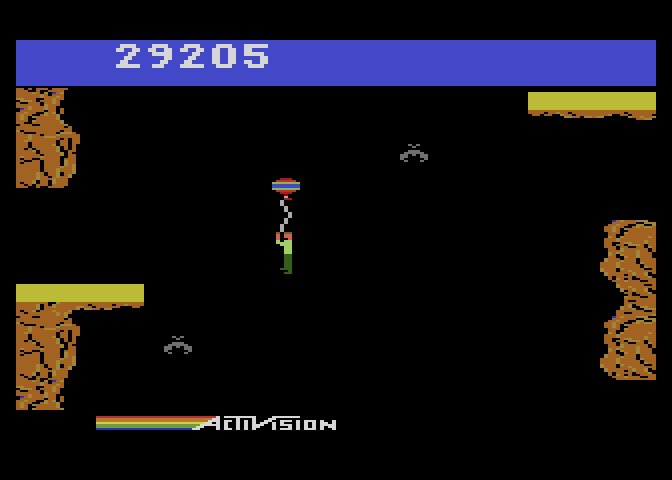
When my classmate, Jacob V, bragged about Super Mario Brothers and asked me if I also got the new Nintendo console for Christmas, I said I was more into baseball cards while silently convincing myself that Q-Bert and Pitfall 2 were as good as video-gaming would ever get. When Jacob teased me for wearing the same pair of jeans as the day before, I lied and said he was mistaken. When he called my bluff and said I should mark the jeans with ink so I could prove the next day that I owned more than one pair of jeans, I agreed, and then spent the evening trying to remove the ink mark from the denim. When the boys in my class started playing Dukes of Hazzard with their respective orange General Lee matchbox cars, I pretended not to be crushed after Matt W. told me I couldn’t play with them because my Generic Lee wasn’t enough.

The storytelling trainer’s prompts were so powerful, it seems, that with my sunglasses now blocking watery eyes, I ultimately landed in a childhood moment I hadn’t thought of in over 30 years: a quiet time of independent play with my Cabbage Patch Doll—as I said, my parents did their best to provide for us. I’m roughly 8 years old and through the powers of imagination, I have stepped into the shoes of a lower middle class parent struggling to provide for his child/doll. It’s Christmastime and I’m explaining to my child/doll through very real tears that all I can afford to give her is a small pillow.

“Simply having a shameful Christmas time.”

This repressed memory has no doubt been lurking in my subconscious for at least the last 7 years, feeding my parenting insecurities, nudging me almost daily to diligently save my pennies so my family is never without, while also quietly pushing me to give my child as much as I possibly can so that he’s never without. So that he has enough.

When it was my turn to share my personal story and these memories with my coworkers, I struggled with how to conclude the story. We all struggled, really. Ten minutes isn’t a long enough time to draft a personal story that’s both compelling and cogent. This was my rationale when I ended my story with a punchline about striking out Matt W. on three pitches in a Little League baseball game. And this was the rationale I told myself when my boss’s personal story about ensuring a healthy work–life balance ended with her seemingly advocating for an unhealthy work–life balance. And so I left the retreat that day, eager to finish crafting my personal story, completely baffled as to how to end it, and wondering if my boss was maybe trying to tell us something. And then.

Three and one half weeks later, I signed on to a Zoom meeting where I was told “it’s not us, it’s most definitely you,” and I found myself staring down the barrel of unemployment, cursing the can of repressed memories the storytelling trainer had opened up, and fighting off visions of giving my child one small pillow for Christmas. On cue, my old friends, anxiety and depression, showed up for an unannounced visit; they truly are the worst houseguests. And I became terrified the ghosts of my unknown future were going to send me spiraling into a melancholy state of Generic Lees and ink-stained Levis and of never being enough. But … a funny thing happened on the way to my 40s. 

At some point during the trials and tribulations of my younger Benchly (see nearly every previous blog entry), I managed to snag myself a healthy relationship with an extraordinary woman. How, you ask.

Well, dear readers (read: reader), while I was busy lamenting gifts I did not receive as a child, I overlooked the ones I had been given: compassion, honesty, respect, and love. Each of these gift-wrapped treasures from my parents laid the foundation upon which I’ve built my entire life. They enabled me to cultivate and nurture a relationship with the Mrs. for the last thirteen years so that, as I lay there on the cold, hard gurney transporting me to joblessness, Mrs. Benchly’s calm and confident bedside manner eased my worries, evicted our uninvited houseguests, and, faster than you could say “Possum on a gum bush!,” nursed me back to confidence and straight to LinkedIn.

On a conscious and oft-subconscious level, these presents have also been at the forefront of nearly every parenting decision I’ve ever made. From how to talk to Baby Benchly about his adoption, to listening to and valuing his opinions, to cautiously allowing him to interact with the world and find his place in it. And combined with the gifts of storytelling, creativity, and curiosity my parents also bestowed upon me, these presents helped me face this career transition head-on and to quickly land a new job at a righteous organization four weeks and four days later. (Thus far, the work–life balance has been appreciated!).

I still don’t know how to end this story. I suppose that’s OK. As a parent, I have really good days like when my son is given a gift and offers to share it, or when he volunteers to donate some of his toys so less fortunate kiddos can enjoy them. And then some days I don’t necessarily want to write home about, like any day he’s had a case of the “Gimmes” and I’ve been short with him in response.

Fortunately, no matter what, each day always ends, a new one always begins, and with it an opportunity to start over. It’s calming how episodic parenting can be. You just have to make sure you freeze the frame every once in awhile so Waylon Jennings can help you appreciate the parenting challenges you’ve overcome, the loved ones who helped you along the way, and the moments when you can admit to yourself that who you are and what you have to offer are enough.

I do not think it means what you think it means

There are approximately 7.2 billion people in the world today. At some point in our world’s history, one of those 7.2 billion people studied the other 7.2 billion people in the world and determined that the females in the bunch were giving birth to 255 people per minute.  Four and one-quarter babies every second.  In the time it will take you to finish this paragraph, more than 130 little Aries kids will have unhappily come into this loud, bright, scary, cold world; more often than not born to happy parents proud of what they had accomplished. Forgive me if I’m dwelling. I wrote this paragraph after spending a few days in Philadelphia, dealing everyday with the consequences of overpopulation, of men and women who couldn’t keep it in their pants: thousands of similarly-dressed parasites involved in the same deeply-meaningful conversations about careers and love and the world’s problems; all while fighting for the last stool in the bar, the last parking spot on the street.
 
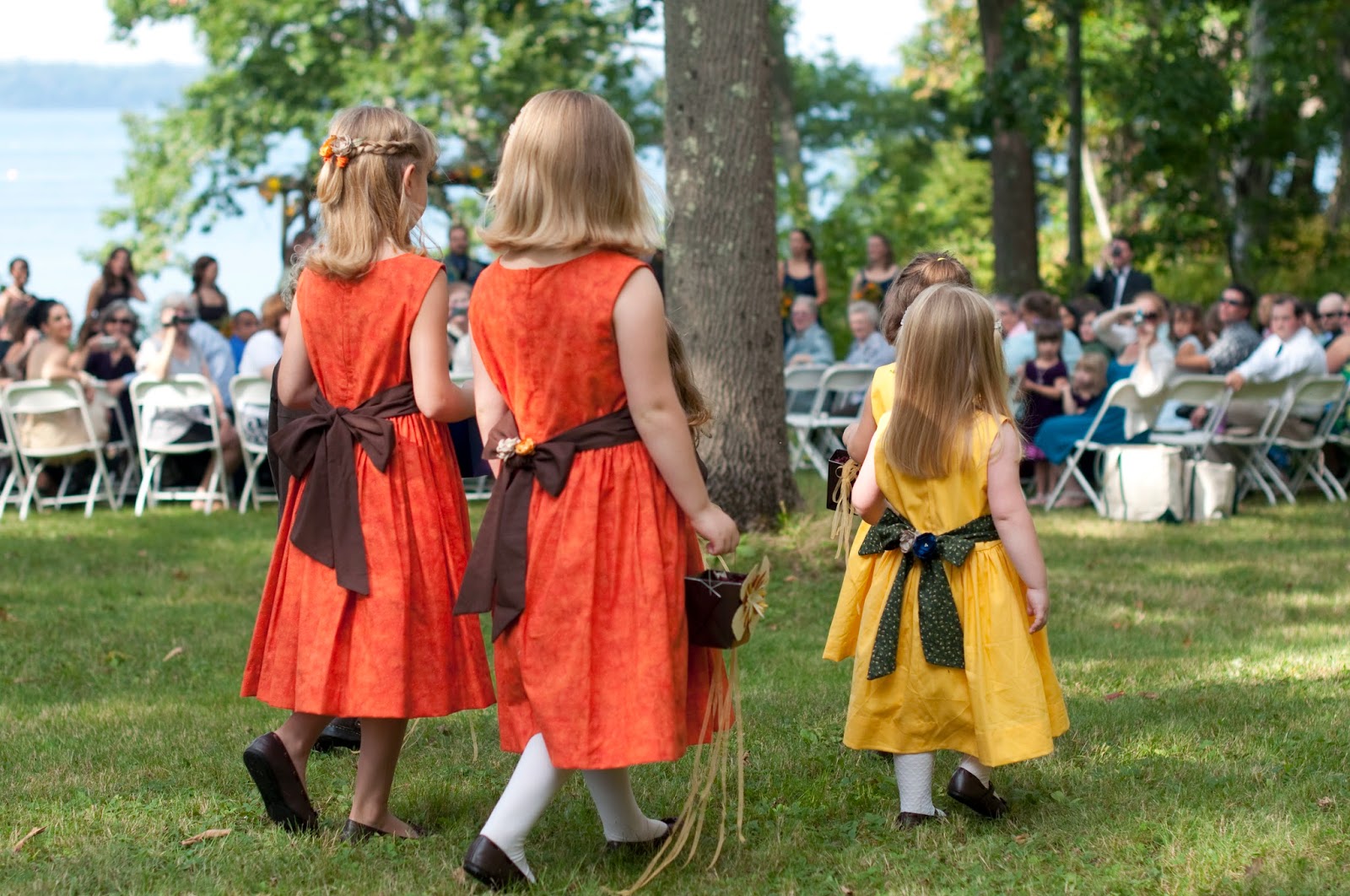
Three and one-half years ago, Mrs. Benchly and I invited 100 or so of the aforementioned 7.2 billion people to gather outside by the Maine seaside in their Autumn Saturday Best. After the familiar “Once Upon  a  Time” melody serenaded all 7 of the beautiful  flower girls, and with the sun shining down upon us, preparing itself for one of its more memorable sunsets, one of our friends, a man of the [friendly] cloth, informed the other 99 or so guests that “marriage, marriage is what brings us together today.” She was not The Princess Bride, I was not Westley, but ours was indeed true love, passionate and pure, which ultimately became a green union of yellow and blue built confidently as if by Masons, sealed with a kiss and a vow that “we shall keep together what share of trouble our lives may lay upon us. And we shall share together our store of goodness and plenty and love.” After a seemingly endless journey to find love, a journey at times so disheartening and soul-crushing that it inspired Papa Benchly to say­—a month before I met Mrs. Benchly—that some people were just not intended to find love, this was the ending promised to us by Hollywood and its subsidiaries. When we said “I do, I do, I do,” we were signing on the dotted line of our Happy Ever After contract. This we believed, because how many married folks remember the fine print of their vows, anyway?
 
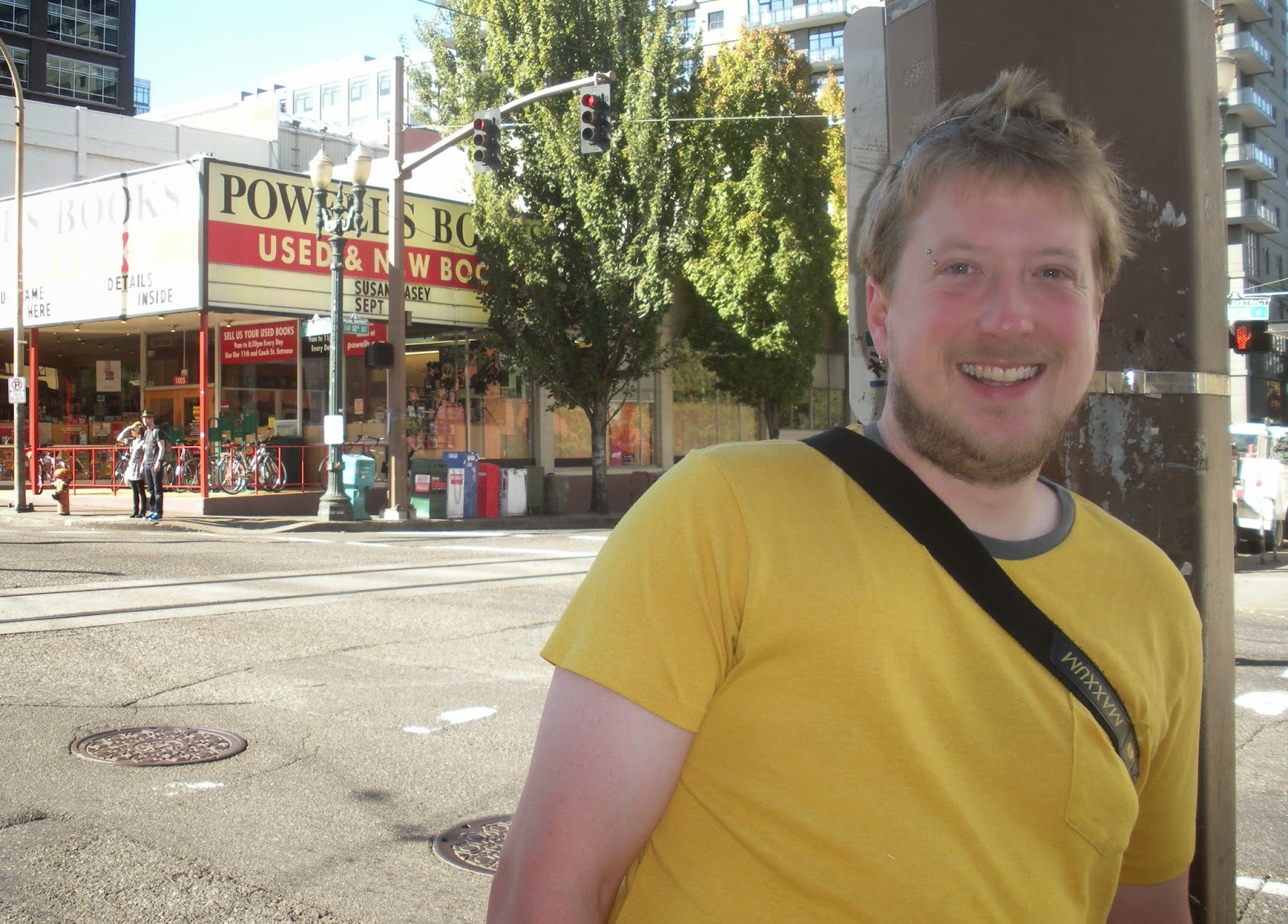
Our honeymoon was, cliché or not, perfect. We ventured to the Pacific Northwest in the autumn, with raincoats in tow, and returned home two weeks later nearly sporting suntans. Mrs. Benchly rearranged our travel itinerary so that I might browse the hallowed grounds of Powell’s Books. On. Our. Honeymoon. Love. On more than one occasion, I walked around a park taking pictures of flowers. Again, love. We returned home to our dog, Agatha, the best dog in the world who smiles when she greets you and who falls—into your body and asleep—when you ask her to “snuggle.” For our first anniversary, we ventured to Germany in the autumn, and two weeks and 1400 pictures of sunsets, castles, and mountain peaks later, we returned home with those same unused raincoats folded neatly in the same spots in our luggage, two metaphorical foreshadows thinking to themselves, “should we be worried?”
 
We suspected there might be a problem before there was one. Mrs. Benchly told me her fears before marriage, before law and God said we should try. If you were naïve, as I was then, you would say, as I tried to say then, that we were prepared for anything. But you wouldn’t be prepared, as we weren’t, because when you prepare for anything, for your share of trouble, what you’re really doing is praying to whomever will listen (wishing, really) to ensure your store of goodness and plenty and love. Isn’t that what Grandpa made you believe you’d get?
 
After a year, I wasn’t nervous. Maybe I was a little bit concerned, but that’s not the same thing. But then we entered a university study at the hospital because it gave us free access to expensive medicine. And then the study ended and we found ourselves stuck in congestion on life’s highway surrounded by lanes of traffic flowing freely until we moved into  them; two Michael Boltons watching their loved ones speed by them to their full-house destinations. And then we went back to the hospital (sans university study) because it gave us access to expensive medicine. We placed our checks in their hands like tokens in a slot machine; hospitals and casinos are not all that different. And then the treatments ended and we found ourselves staring at the same mile marker, faced with a realization that our dream of a life without pain was sold to us by a con artist.
 
There isn’t really a good word for our current reality. I keep coming back to the word that does not mean what one might think it means. It applies in a sense—our reality is not one either of us ever envisioned for our future—but the word still doesn’t mean what one might think it means. Even so, I can’t help but use this word. I use it to describe the reality that has been written for us. I use it to distance ourselves from this reality; to pretend that we’re characters in a beloved movie just two hours and one wheelbarrow away from a happy ending. Because then, when I can imagine our life existing in such a script, I don’t mind so much the countless scenes in the lives of those around me. The lives whose scripts don’t feature the word that does not mean what one might think it means.

Up Up Up Up Up Up

“[I]f you follow your heart, you’ll find your purpose and end up proving you were right all along.”

—Overly optimistic Benchly, May 21, 2009

I wonder if any of you have seen the original ending to the movie Sleepless in Seattle. The director, Nora Ephron, decided to cut the final scenes after a test audience nearly went so far as to cut them for her. As you know (or if you don’t, get ready to be spoiled), the theatrical version of the film ends with Sam and Annie meeting at the top of the Empire State Building where they introduce themselves and slowly exit the observation deck, neither able to hide their love-at-first-sight astonishment. Cue the credits.

What you may not know is what happened in the scene that originally followed. After cutting to black and a line telling us that 12 months had passed, we’re shown Annie, Sam, and Jonah eating breakfast in the kitchen of the Seattle houseboat. Sam is reading the newspaper, and Annie, while placing her cereal bowl in the sink, asks Jonah if he’d like more Kix. Jonah replies that he is full and runs into another room to turn on the television. Sam places the newspaper on the table, walks over to Annie, gives her a kiss as he places his bowl in the sink, and says he needs to balance the checkbook. Cue the credits.

So how does that make you feel? Disappointed? Relieved that Ephron ended it when she did? Desperate to find the lost scenes on the Internet? If so, let me save you the trouble. That scene was never filmed. It was never filmed because it was never written. And it was never written because Ephron knew better than to mess with the love story formula: Despite the obstacles of X and the efforts of Z, A and B live happily ever after (unless, of course, they were created by Nicholas Sparks’s imagination). Ephron may have taken an unconventional route in placing the Meet Cute at the end of her film, but she knew that once she had established their Happy Ever After, the only thing she could do next was cut to black, or, at the very most, a shot of hearts on the Empire State Building.

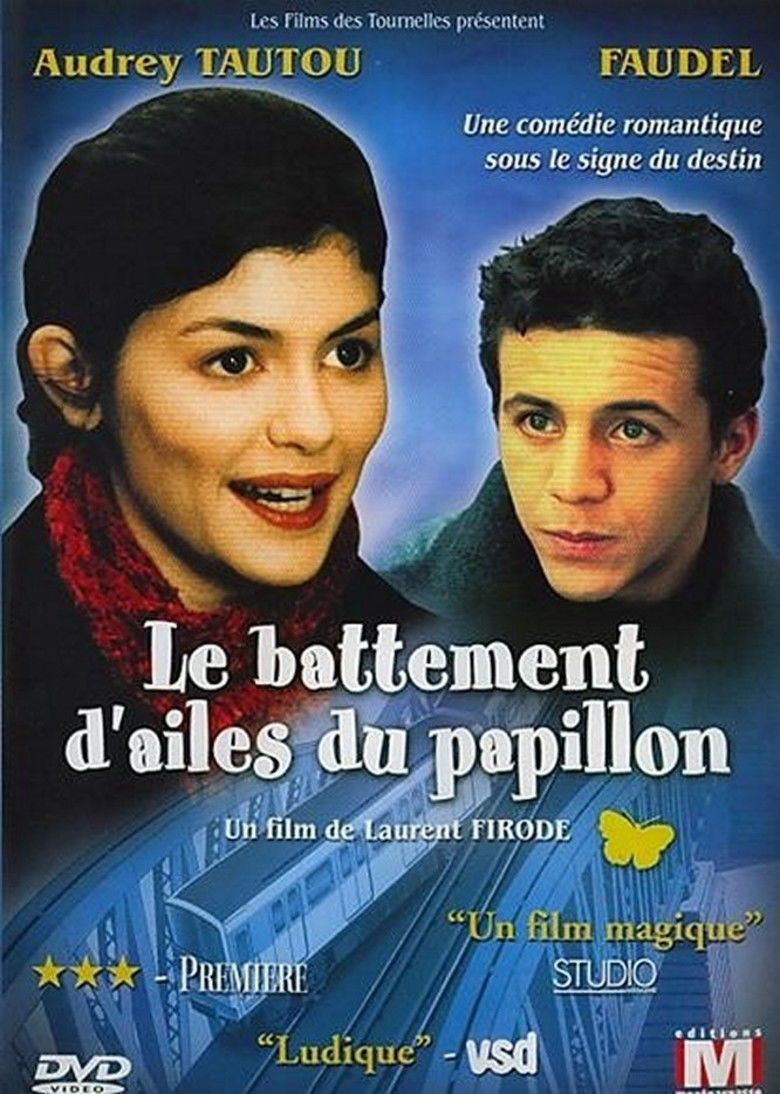
Another movie that followed to a T the same formula of X and Z and A meets B at the end was the tiny, near-perfect French film Happenstance. Some of you have seen this movie. Some of you haven’t. And only the most devout readers (read: reader) of mine might recognize it from the afore-quoted May 21, 2009 blog entry. Like most all of the entries leading up to it, that entry dealt with my struggles with relationships and my path in life. What sets that entry apart, though, is the fact that it was the last of its kind. And it was the last of its kind because it came just 9 days before I met the future Mrs. Benchly and found, with her, my Happy Ever After.

I bring this up today, in my first(!) entry of 2011, because I’ve begun to wonder, should I have followed Ephron’s cue and ended this blog with the above quote? You could argue that this blog has been more than just an outlet for my frustrations and joys with dating and relationships and the single life, but you’d lose that argument in as much time as it would take for one to quote my ninth blog entry. This explains, I think, why this blog has been so quiet for so long: Benchly’sWord, though occasionally home to a non-love-life-related insight or two, has always been about my path to love. And now that I’ve found love, my writer gut is telling me to cue the credits, or, at the very most, a cheesy musical montage featuring clips of previous scenes. But, as a writer, I need this creative outlet. So, what’s a blogger to do?

Like most of the questions I’ve posed through the years, I haven’t had a solid answer to the question of what should become of Benchly’sWord. Until today. Now that I can see clearly, it’s silly to think how long it’s taken me to figure out the next logical step for this blog, but I’ve been under the writer’s block weather for over a year: after a 7-month bout with Engagement Brain, I fell ill with a seemingly never-ending case of the Newlyweds. I still have most of the symptoms, but I’ve slowly been able to manage them, at least enough to be productive. And so it is that I can announce today my solution to my writer’s block:

I’m going to write a new story. In blogging terms, I’m changing directions. In movie terms, I’m writing a sequel. Sure, the sequel may have traces of the original in it (because, people evolve and so do relationships and I’ll want to document those changes), but this story won’t be about my path to love. And it most certainly won’t be about reading a newspaper while eating breakfast. To be honest, I’m not entirely sure what it’ll be about. Maybe it will be about creating a home. Or a family. Maybe I’ll find out Darth Vader is my father. Maybe Fredo will break my heart. Or maybe a shark will follow me all the way to the Bahamas to settle a personal feud. Who knows? What I do know is the first act of my life has been written and it’s time for the curtain to come up on Act 2. The lights are flashing. Please take your seats.

The Road Unexpectedly Taken, at 1 a.m.

Note to readers: I apologize for my absence these last few months. As most of you know, I was a bit preoccupied planning my wedding to the now nicknamed Mrs. Benchly. I didn’t have much time for blogging and what little time I had was spent crafting an update or two for our private wedding website. But now that the wedding is over and there’s no need to worry about paparazzi crashing our wedding, I thought I’d share with you what little I wrote. And then, once I’m done with that, maybe I’ll start writing again. I’m overdue …

Imagine that you and your girlfriend (you know, the girlfriend to whom you are “practically engaged”) have decided that you want to get married in Maine in September 2010, 8 months away from the current pre-engagement calendar date. And imagine that her parents have called the two of you at 8 p.m. on a Friday evening to discuss, on speaker phone no less, a potential waterfront wedding venue 5 hours from you that they discovered earlier that day and which they strongly encourage the two of you to see for yourselves in the immediate future, which is parent-speak for “yesterday.” After consulting a calendar, you realize that unless you visit this venue in the next 48 hours, chances are such that you won’t be able to see it for another month, and just in case you dared to think that this decision was an obvious one, remember: your girlfriend’s good friend is driving in from Syracuse in 21 hours. With all of that in mind, what do you do?

For me, the whimsical-to-a-flaw boyfriend, the decision was easy: pack overnight bags, do a quick Internet search for a reasonably-priced hotel located in the area through which you’ll be driving at 1 a.m., leave home by 9:30 p.m., check in to the hotel, sleep for 6 hours, get up early, meet up with said girlfriend’s parents, tour the wedding venue, and return home in time for the arrival of the Syracuse friend. For my responsible, realistic girlfriend with a sweet tooth for whimsy, the decision required a few minutes of careful consideration before she ultimately decided that my whimsical plan was the only option for us. And that’s how I found myself listening to my girlfriend sleep while I fought through my yawns to be able to see the mostly-deserted 1 a.m. Maine roads. And that’s how my fiance and I ended up at the Harpswell Inn in Harpswell, Maine 13 1/2 hours later. And that’s how we discovered the site on which our friends and family will gather 8 months from now to witness and celebrate our marriage.