What do we do now?

A week after Election Day, the BBGE gathered at The Dean’s house to discuss Cormac McCarthy’s The Road, the fictional tale of a father and son trying to survive in a post-apocalyptic world. Some sort of event happened an unspecified amount of time prior to the events described in the book, and resulted in the father and son wandering along a road in a desolate world, desperately searching for their next meal. The story takes place over a few months, and through the book’s format, which is essentially one long chapter broken down into short, mostly-chronological anecdotes, the reader can’t help but feel as if he/she is walking on the road alongside the protagonists, living each day as if it might be the last. Through McCarthy’s borderline-monotonous-and-consequently-effective descriptions, it becomes extremely easy to empathize with the characters and the dire situation in which they find themselves. This book affected me by making me believe such a reality was possible, and by forcing me to wonder how I would handle such a dramatic life change. (We all know how much I love change.)

Considering that the recent presidential election was on the liberal minds of all BBGE members, it was surprising when no one wondered aloud who was running the country when this fictional apocalypse occurred. What was not surprising, however, was how quickly any of our conversations that night quickly transitioned into discussions on said election. As you probably imagined, like the majority of my fellow Vermonters, I celebrated Barack Obama’s victory on Election Night, and like quite a few of those same Vermonters, I stayed up late to hear his speech; a speech and a moment that nearly led me to tears. I discovered that among my fellow BBGE members, I was not alone. Obama was an historic candidate on so many different levels and his campaign slogan “Change we can believe in,” though awkwardly phrased, had inspired all of us nonetheless. And with 53% of the national vote, it could be argued that this country mandated that January 20, 2009 be a day of change. Whatever that vague change may be is still undecided.

While President-Elect Obama prepares to transition into the Oval Office of Change, we the voters return to our everyday lives with our everyday problems. The Professor remarked that, like so many others, she felt the symptoms of election withdrawal: the emptiness that can suffocate you when, after an 18-month election season, the need to check election polls and view SNL videos and discuss political gaffes has quickly vanished and been replaced by the realization that as historic as this moment was, none of your problems have disappeared. And it’s in this moment that I’m reminded of the underrated 1972 film The Candidate, starring Robert Redford as Bill McKay, a 30-something son of a California governor hand-picked to lose a Senate election against the popular Republican incumbent. After surviving and thriving in a primary, a debate, and a tiring election campaign, McKay surprisingly wins a close election and responds by asking his advisors, “what do we do now?” In one of my favorite movie endings, the film ends without McKay ever receiving an answer. And I imagine that that’s kind of how this country is feeling right now.

A NY Times critic said it felt as if The Candidate “had been put together by people who had given up hope.” I think it could be argued that Obama’s campaign was so successful because it was aimed at inspiring the very same kinds of people capable of making such a film. After living so many years desperate to believe in a candidate, voters were ecstatic when they finally found someone about whom they didn’t have to make excuses. Gone were the days of “he’s great, but,” and “I like what he says, but,” and “sure, he has the same values, but,” and in their place stood the realization that for the first time in their adult lives, they were face to face with someone in whom they could finally believe. Their Mr. Right, if you will. “He’s great,” without adding a “but.”

But “what do we do now?” When people get what they want, they often wind up wanting more. Who knows why really? Faced with an uphill struggle against two wars, a faltering economy, a record deficit, and hardly any national pride, my guess is no president could achieve instant results, no matter how Mr. Right he/she was, and so I’m curious to see how long the country gives Obama before they start giving up on him. And equally important is how Obama will respond if they do.

But I think that despite this country’s recent history of picking the wrong guy, she finally nabbed the right one this time. And I have hope that he will pass her tests with flying colors. I have to have hope. Because as great as Cormac McCarthy’s story was, no one wants to walk down a road alone.


Benchly’sleeve

As Papa Benchly’s and my checkbook will confirm, nine years ago, I purchased four years of education at the University Whose Name Shall Never Be Said. And though I was paying for the classes, I found most of my education outside the classroom. While a student there, I wrote a newspaper column that often critiqued the university, its people, its departments, and its policies. And though I admit that the column was borne out of contempt for the university, I gradually found myself writing words that I hoped would help positively change the university (while maintaining my often sarcastic tone, of course). In a sense, I was seeking change I could believe in. But as President-Elect Obama and his supporters know far too well, when you criticize something, even if it’s something you love, often times the response is essentially, “if you don’t like it here, leave,” and criticism is most certainly what I received, even in the form of threats (unless, of course, those five fraternity brothers who showed up at my apartment were telling the truth when they claimed they only wanted to talk).

It was in dealing with negative responses to my newspaper column that I learned a valuable lesson in journalism: a journalist should respond to criticism only when there’s a gross misstatement of fact, when questions have been asked of the publication, or when the criticism needs some sort of clarification, lest the journalist risk alienating his/her readers with a most-likely never-ending argument/contest of who can have the last word. Most importantly, the very same freedom of speech that allows journalists and bloggers the opportunity to speak their mind must provide the same blanket of protection and opportunity for those who raise their voice in disagreement. And so, nine years later, these are the thoughts that are on my mind as I sit here and contemplate what, if anything, to do about the recent feedback hand I’ve been dealt on this very blog.

As my reader(s) most likely know, my last blog entry had the honor of receiving not one, but three comments from my fans (just about doubling my fan base), two of which from “Anonymous” could be classified as “Constructive Feedback.” (The other, authored by Ms. Darling, I’ve filed under “Obligatory Adoration.”) For the technologically savvy (read: those who can operate a mouse), I’ve included a link to these comments so that Anonymous’s words can speak for themselves.

For the technologically challenged, I’ll briefly summarize them here: Anonymous was concerned that my written words might be harmful; that good communication required listening, which became difficult when communicating in writing; that if I wasn’t open to stepping out of my comfort zone to listen to what others had to say, it would be because I was afraid to hear criticism or I was simply self-centered; and that if I stopped hiding behind my words, I’d be better off for it. A few days later, Ms. Darling’s sweet (pun intended) blog entry about me received another Anonymous posting, which seemed to be related (pun not quite unintended): “Be kind, and remember that while a second or third life can be lived online, you are still left with the first.”

I have no way of knowing if the comments from Anonymous #1 and Anonymous #2 are related, but for the purpose of this blog, I’m going to pretend that they are. And though I have a hunch that Anonymous #1 wasn’t responding to my blog but rather to my actions and/or inactions in my “first life,” since she claimed to be “offering a response to some of [my] musings,” I’ll treat her comments as such. With that in mind, it seems to me that the argument being made here is that there is a time and a place for a blog, and that maybe Ms. Darling and I have crossed that fine line by speaking openly about our recent dating adventure/challenge, which has occurred fairly close (some would consider too close) in time to our previous relationships. I’m going to resist the temptation to debate who is right and who is wrong; with such an ever-changing technological world, I think even Emily Post would have trouble finding her social etiquette footing. What I will do instead is offer up for your consideration and clarification my brief (read: non-Benchly-like) philosophy on blogging:

When I first started blogging back at the obviously-trademark-infringed,-though-cleverly-named-nonetheless The Continuing Story of Bungalow Benchly, I had a discussion with Ms. Parker about how personal one’s blog entries should be. I don’t remember her opinion on the matter (I think she said if it was meant for your journal under your bed, it shouldn’t be in your blog), but I remember mine as it’s one I’ve tried to maintain to this day: I want to write only about what I would feel comfortable discussing face-to-face with anyone tomorrow. My aim has been to express the same respectful honesty in my happy-ever-after blogs as can be found in my heart-broken-again ones. And though, admittedly, a few of my blog tirades crossed a line (the snoring banishment episode comes to mind), I think for the most part I’ve done a great job. I may be a screenname as I post this, but as Anonymous #2 pointed out, I’m human first and foremost, and so it’s no surprise that I’ve made some blogging mistakes. At the very least, I can say that they’ve been genuine ones with honest intentions.

So to Anonymous #1 and Anonymous #2, thank you for your feedback. I appreciate that you’ve taken the time to read my blog and to consider all that I have to say. And I hope that you continue to do so. If you do, I promise you that what you will find is what you’ve always found: an honest, sensitive, and respectful portrayal of my feelings about my life and the world and people around me. Like my wet sleeves in my “first life,” I wear my emotions in my second life here on my blog. If I’m happy, if I’m sad, if I’m heartbroken, or if I’ve met an amazing woman and am hopeful that things will work out for us in the end, you can rest asssured that you’ll read it here, either boldly stated, or somewhere between the lines.

Away With Words?

Two weekends ago, after a 3-person, 4-phone, 2-state, text-message, voicemail, super game of Telephone with Ms. Darling and her family, to ensure that she would return in time to the green mountains from her Beantown night with Madonna, Ms. Darling and I found ourselves at the Vergennes Opera House for a Friday night performance of The Foreigner, by Larry Shue, starring my friend Jay Peak, and with a brief cameo by his girlfriend Gee Wiz.

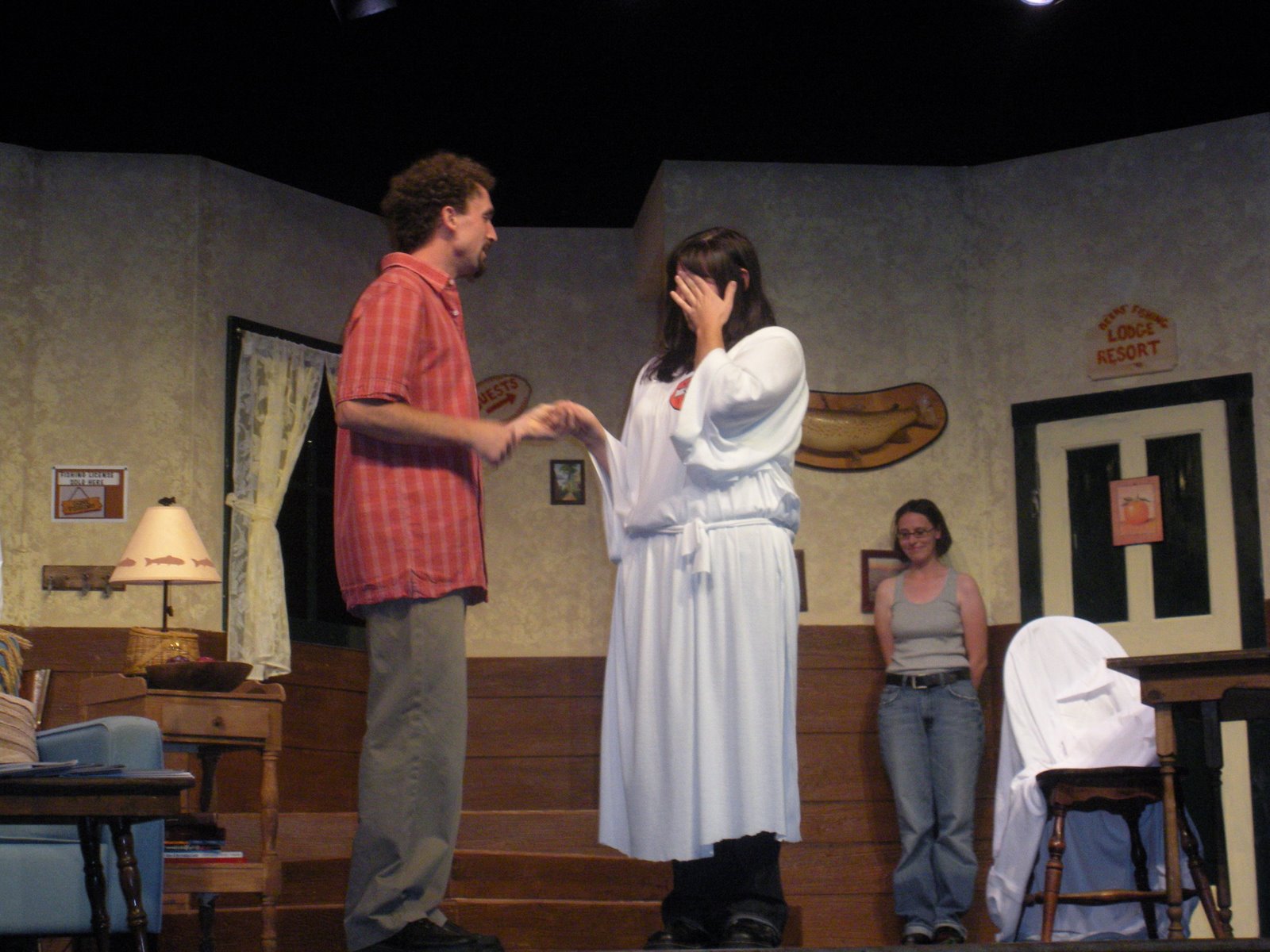
The Foreigner is a 2-act play that takes place at a fishing lodge in Georgia and centers around a pathologically shy and insecure British man named Charlie (played by Jay Peak who, jokingly [I hope] said he found some inspiration in the personality traits of yours truly) who, in an attempt to avoid any awkward social interaction with the other guests, pretends to be a non-English-speaking, non-speaking foreigner. When certain events force Charlie to communicate with the other guests in his pretend non-English language, hilarity ensues. And though the ultimate message of this play might be that even the unspoken word can communicate a human’s inherent goodness, one lesson I drew from the play was the power of language.


As the banner on my blog confidently tells my reader(s), and as most of my English-major friends will attest to, the pen is often mightier than the sword. Words matter and are often more powerful than ever intended by the person communicating them. Exhibit A for this argument can be found no further than the fact that I still remember the five most negatively influential comments made in my direction, even though all occurred at least 12 years ago, and some, a quarter of a century ago:

“You’re the worst sorry-assed student I’ve ever seen,” said Gary Perry, 11th-grade chemistry teacher after discovering me looking at a college basketball tournament bracket in class; “God is ashamed of you!” shouted Chris Ortloff, a church member after I dumped a bucket of water on his son at a church youth group meeting (I asked Papa Benchly if God was ashamed of me. His paraphrased response was, “you shouldn’t have done what you did, and that’s not something God would condone. With that said, he probably had it coming.”); “You’re Benchly. You’re asexual to us,” said Ms. Scharf, describing why I was “just friends” with 8 women in college; “Ew, Benchly touched my arm! Now I have cooties!” screamed nameless female elementary school classmate when a bump in the road knocked me into her seat on the bus; and “That’s not a real Dukes of Hazzard matchbox car, Benchly. You can’t play with us,” said nameless 1st grade classmate when I attempted to pretend that my orange matchbox sports car was The General Lee.

Though ranging from comical to typical to stereotypical to tragic, all affected me, and The Trash Heap would opine that all continue to affect me to this day. Words are powerful and have a shelf life that rivals that of even the most nonperishable foods. Whoever first claimed that names couldn’t hurt you like a stick or stone was lying or kidding him/herself, just like anyone who claims to be rubber, not glue. For instance, the names with which you’ll inevitably tease me after I quote You’ve Got Mail in the next two paragraphs will most likely sting for a long time.

This past year, I’ve been proud of the blog entries I’ve been able to craft with the words that I’ve sewn together. After two depressingly barren years of blogging, I’ve doubled the number of entries from those two years and still have two months left in the year with which to write the stories of my life. In perfect contrast, however, I feel as though I’ve slowly lost the ability to verbally communicate effectively. Anyone who has suffered through my bumbling retellings of a story or a joke lately will surely agree. Like Kathleen in You’ve Got Mail, I always “get tongue tied and my mind goes blank. Then I spend the rest of the night tossing and turning over what I should have said.” I may have a way with the written word, but the spoken one feels increasingly foreign to me.

When I do “have the pleasure of saying the thing [I] want to say at the moment [I’m] wanting to say it,” as Joe Fox warns in You’ve Got Mail, “remorse eventually follows.” For proof of that, I need to look no further than the difficulty I’ve had as of late in my attempts to communicate my feelings to Ms. Darling or my frustrations with certain family members. In each instance, no matter how carefully-crafted each thought was, I exited the conversation either feeling as if I had failed to accurately express what I was thinking, or that I had said too much. Considering how important words are, I’ve started contemplating communicating only in writing. And if this wasn’t the first step to a J.D. Salinger-like reclusive lifestyle, I’d probably go for it.

After all I’ve said, if you’re still left doubting the power of words, consider how they affected the life of Gee Wiz two weekends ago. After The Foreigner‘s curtain fell and the performers took their well-earned bows, Jay Peak stood in his rightful place at center stage, took Gee Wiz by the hand, and spoke the first nonfictional, but nevertheless well-rehearsed and deeply personal words of the night: a proposal. And in response, in between nervous snorts and tears of happiness, Gee Wiz uttered perhaps the most meaningful word of her life: “yes.” And in response, we say, “Mazel tov!”


"With every mistake, we must surely be learning…"

Thanks to the Photo Album Project of 2003–2008, the majority of my photographs since 1992 are now filed chronologically in no less than 10 albums, each with its own decorative cover carefully selected to suggest a maturity void of any effeminate qualities (see also my dark red, manly-patterned Martha Stewart comforter). Buried deep within one of these albums is a photograph taken at the Holocaust Museum in Washington, DC in 1994; a picture whose purpose is actually expressed in the biblical quote contained within its frame: “Only guard yourself and guard your soul carefully lest you forget the things your eyes saw, and lest these things depart your heart all the days of your life. And you shall make them known to your children, and to your children’s children” (Deuteronomy 4:9). In simpler (read: more John-McCain/Sarah-Palin-friendly) terms, the heart of this message is clear: honor history by learning from it and ensuring it isn’t repeated.

In an unintended bit of poignancy, this photograph is surrounded in these 10 albums by photographs of the various serious, semi-serious, and not-so-serious girlfriends/dates/girl-space-friends in my life, each of whom has been responsible for at least one valuable lesson about life, love, my flaws, my strengths, what I’m capable of in relationships, what I need to improve, what I want out of a relationship, what I shouldn’t put up with, etc. Whether it’s the woman who first called to attention my caretaker personality trait, or the ones who made me realize my susceptibility to dependency, or the ones who forced me to take responsibility for my role in our relationships, or the ones who helped me understand that disagreements can be healthy, I’ve learned a lot in the 15 years that I’ve been dating. And although I feel a tad shameful applying the lesson from a Holocaust-related-quote to a 30-something’s love life (I find my solace and justification in another lesson learned from the Holocaust: that each life is valuable and worth discussing), I think it goes without saying (though when has that ever stopped me from saying it anyway?) that if I ever want to find myself in a healthy relationship capable of sustaining the Long Haul, I need to protect these lessons learned from being erased in my memory like out-of-focus digital photos taken one-too-many-glasses-of-wine into a Friday night.


Now that I’ve started seeing a therapist, my past relationships have taken center stage in my memory’s playhouse. Although quite a bit of our 50-minute hours have been spent discussing the Benchlys who, in the last two and a half months, have started to resemble an overly dramatic and meddling family straight out of a bad 80s nighttime serial drama, we have also taken the time to figure out why my past relationships have failed, in hopes that my next one won’t. And though I finally caved at Mama Benchly’s twentieth suggestion that I seek therapy simply because I wanted to vent about my family, I’ll be the first one to admit how nice it has been to discuss my ideas/fears/questions about relationships with an educated, soft-spoken professional, affectionately nicknamed The Trash Heap (I can’t take credit for this one; this was Sarah the L’s idea). For although I pay her and so we’re naturally at risk for the “customer is right” mentality creeping in, her brutal honesty thus far has assured me that I can consider her opinion to be unbiased and caring.

The Trash Heap has been invaluable lately for a reason I’m sure my reader(s) won’t be surprised to hear simply because today I’m about as transparent as a political ad or election running-mate choice: I’ve started dating someone new. Her name is Ms. Darling (Ms. Parker: I have faith that you’ll figure this one out) and a darling she is. In the grand scheme of things, “what it is we’re doing” is fairly fresh and still carries with it that new car smell called Confidence that excitedly says, “This is the greatest car to ever be driven off the lot. I can’t believe it only has 2 miles on it! And look at the cup holders!” In other words, we’re still in that stage when you’re blown away by the refreshing and exciting new addition to your life, and you spend your time together discovering that second glove compartment or whether or not two bikes can fit in the back. But we’re not kidding ourselves. We’re hopeful that this is going in the direction of the Long Haul (and there are certainly days when I’m convinced that it is), but we expect road bumps. We expect headlights and taillights to go out, and maintenance required lights to go on. We expect them because that’s what our respective pasts have taught us, among many other lessons, and to remember and learn from these pasts is to honor them.

(I must admit, this time around I feel an overwhelming sense of comfortable calmness. Ms. Darling excites me and makes me feel relaxed at the same time. This is new for me and most definitely worthy of The Trash Heap’s input.)

I realized recently that the time has come to purchase an 11th photo album. I’m starting to feel overloaded with developed pictures awaiting their appropriate place in my chronologically documented history. Included in those pictures are new ones of Ms. Darling from the hikes we’ve been on, one of our marathon dates, the night we got lost under the stars, and a recent bike ride. These are moments I already know I don’t want to forget, lest these things depart my heart all the days of my life.

"It ain’t over till it’s over."

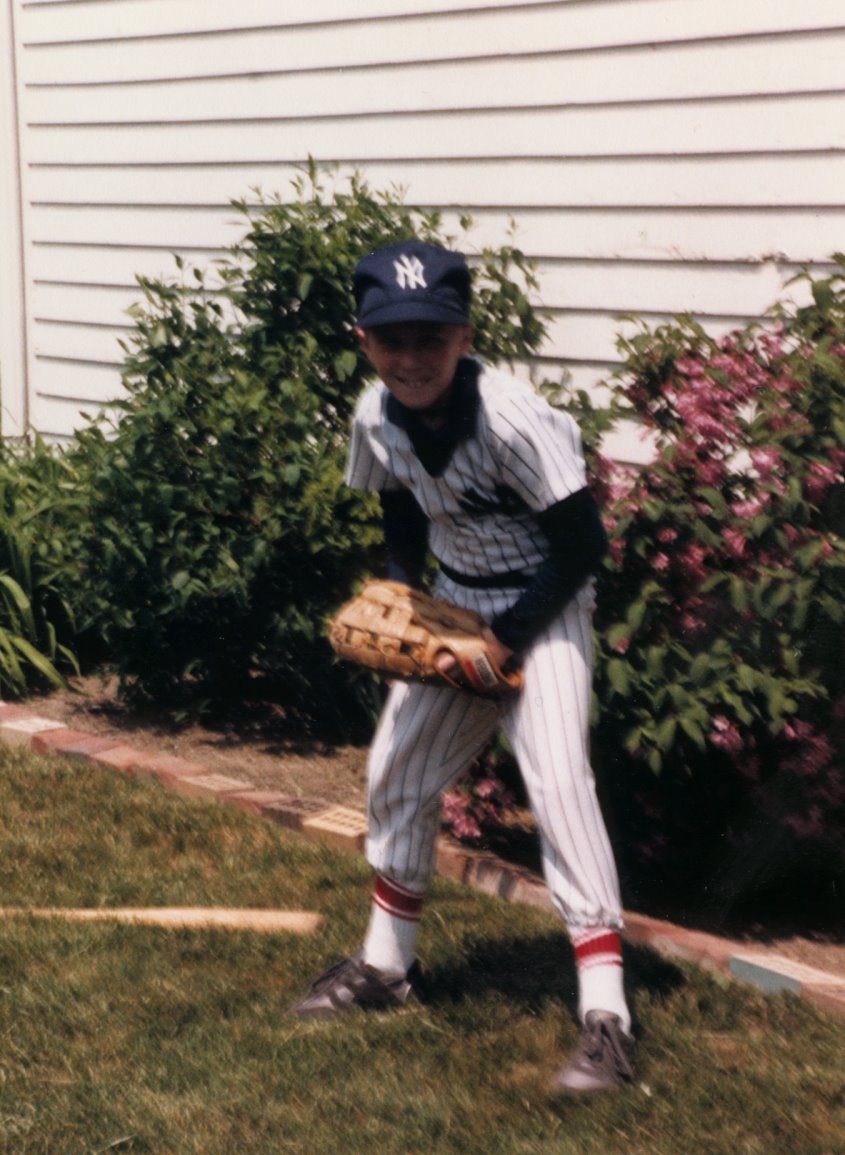
Back in the mid-1980s, like most single-digit-old, elementary-school kids, I developed a strong case of America’s pastime. I’m pretty sure I joined Little League in 1985 simply because it was the thing to do, and when you consider my team’s 3-year record of 3-45, it’s remarkable to think that I’ve stuck with the game for so long. Not only did I stick with it, though, I also grew to love it, both on the field and off.

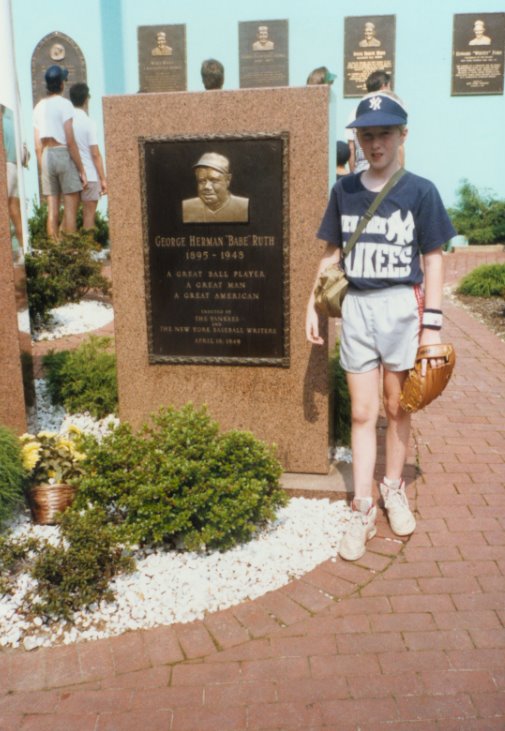
Around the same time that I learned how to play baseball, I began to take interest in watching it. I can still remember, with the kind of clarity that hardly ever accompanies a nearly 25-year-old memory, sitting in front of my grandparents’ television in 1984, watching the Oakland Athletics play, and seeing their speedy outfielder Rickey Henderson steal second base and then run to third when the throw sailed into center field. I ran as fast as Henderson into the kitchen where my parents and grandparents were discussing parental/grandparental things and proudly declared that Henderson was my new favorite ballplayer. In the winter months, when Henderson was traded to the New York Yankees, I declared that the Yankees were my new favorite team. But let’s be honest here: my heart ultimately would have led to the Yankees regardless of their roster. Like my father and his father before him, the Yankees were in my blood.

When my grandfather discovered my new love for his old team, it was like if the day you realized you loved candy coincided with the revelation that your home had a chocolate pond in its backyard. Suddenly, I was receiving hand-me-downs of the Yankees Magazine, I was going to an actual Yankees game with him and my father, and the sounds of a ballgame could be heard coming from the back room in his house nearly every time we visited. The games were on so often that I wouldn’t have been surprised if the letters “WPIX” had burned themselves into the screen. The Yankees were in my blood, yes, and my grandfather ensured that it would stay that way forever.

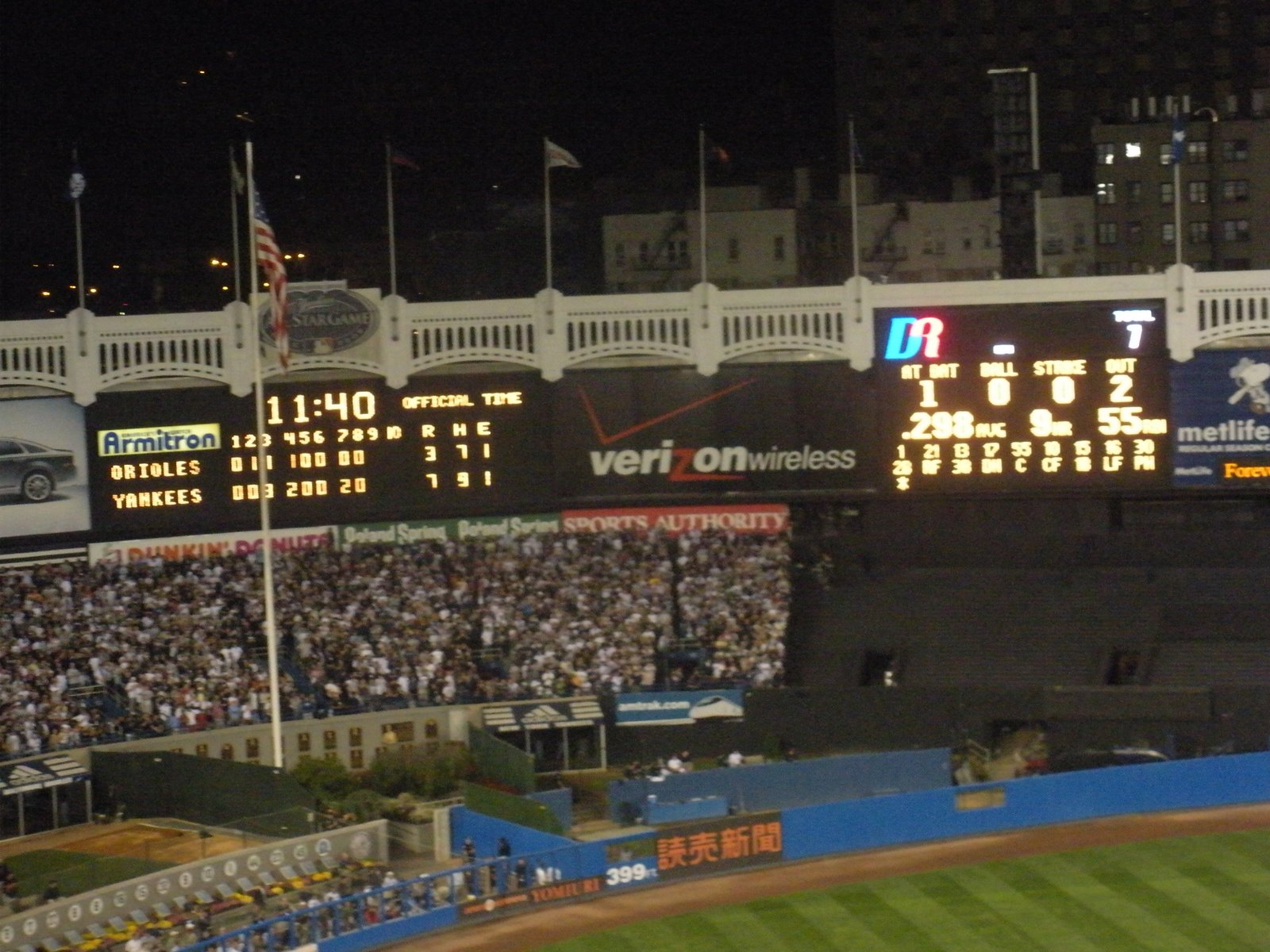
As some or all of you know, Papa Benchly and I made a bittersweet pilgrimage to Yankee Stadium this past Sunday, the last day of summer. It was sweet because this was the first Yankees game that he and I had been to together in approximately 20 years. It was bitter because the Yankees had all-but-mathematically been eliminated from playing in the postseason for the first time since my senior year in high school. It was sweet because the pre-game ceremony paraded out a long list of Yankees, including two of our heroes: Yogi Berra for me and Bobby Richardson for him. And it was bitter because the ceremony had been planned to honor the final baseball game to ever be played in the cathedral, which can now, three days later, be referred to as “the old Yankee Stadium.”

The flags atop the white frieze that helps to envelop the fans within the Stadium, sat motionless in the warm, summer’s night; if the ghosts of the building were going to have their way, we’d have to wait another day for the end of the seasons, both baseball and summer. Papa Benchly and I sat in the upper deck on the third base side (in about the same spot as where the entire Benchly family sat in 1987 when Papa Benchly and I were convinced by Mama Benchly that bringing the entire Benchly family to a Yankees game was a “good” idea [considering Sister #2 probably only remembers the music she listened to on her walkman, and Sister #1 probably only remembers Don Mattingly’s butt, and Mama Benchly probably only remembers the incredible heat that forced us to leave the game early {!}, I think it’s safe to say that this wasn’t a “good” idea]). In the final game at Yankee Stadium, Papa Benchly and I sat in seats that originally cost 3 times as much as they did that fateful Benchly family day in 1987, and for which in 2008 we paid the scalper 10 times the face value: a price worth paying.

On the long and sunny drive down to the Stadium, Papa Benchly and I reminisced about past Stadium trips and how every trip culminated in a Yankees loss. We saw an Old Timer’s Day game, an Opening Day game, a doubleheader, an extra-inning game, and the game in which Don Mattingly extended his home-run streak, among, we’re pretty sure, many other games. And the Yankees lost every single one of them. It’s safe to say that this affected me. When the Yankees finally made it to the World Series in my freshman year of college, I turned down the opportunity to buy tickets simply because I didn’t want my presence to hurt their chances of winning. And when this losing streak was finally broken at an early-2001-season game against the Boston Red Sox, it required not one but two 9th-inning home runs to save the day. And, of course, that particular season marked the end of the team’s run of World Series titles so it could be argued that my presence at a regular season game changed the course of the postseason’s history. Needless to say, this was a curse my father and I hoped would be broken that night, but we understood: when it comes to baseball, the unexpected is expected.

For a long time, and including a previous post in this blog, I’ve been a fan of former baseball commissioner A. Bartlett Giamatti’s quote about baseball. He says we “count on it, rely on it to buffer the passage of time, to keep the memory of sunshine and high skies alive,” and that just when we need it most, “when the days are all twilight, it stops.” What I had never noticed until recently, however, was the rest of the essay from which this quote was taken, entitled “The Green Fields of the Mind.” In it, Giamatti expounds on his opening theory and how it relates to the illusion of eternity: “It breaks my heart because it was meant to foster in me the illusion that there was something abiding, some pattern, and some impulse that could come together to make a reality that would resist the corrosion; after it had fostered again that most hungered-for illusion, the game was meant to stop and betray precisely what it promised. There are those who were born with the wisdom to know that nothing lasts. I am a simpler creature, tied to more primitive patterns and cycles. I need to think something lasts forever, and it might as well be that state of being that is a game; it might as well be that, in a green field, in the sun.”

Anyone who has ever spent 11 hours in a car in one 24-hour span knows that the open road allows for the opportunity to get lost in your thoughts. And so it was that in between conversations with Papa Benchly, I found myself thinking about how my life had changed so much in 31 years while a building on a 5-sided plot of land had resisted corrosion and remained almost entirely the same. I couldn’t help but notice the differences: instead of being driven to the game, having my way paid for me, and discussing school and baseball, I drove us in my car, paid for my half, and found pleasure in our conversations about our family’s history, and baseball, and the upcoming election, and the economy, and the current Benchly family drama. 20 years later, while our relationship with one another had not changed, our relationships to the rest of the world had: I was now an adult, he was now a grandfather. And there we were driving to and from a landmark that, for my 31 years, had always been ready to serve as a backdrop to my life, and which, a few short hours later (after a long-overdue win), would no longer be available, and I realized that Giamatti was right: nothing lasts forever. Stadiums. Baseball. Youth. Life. And the only comfort I can find is that of a green field in the fading sun.

"Describe your ideal weekend…"

A friend of mine who has tried unsuccessfully to find love from the online personals dating scene, recently decided to let her personals account expire. In 9 days, she will officially give up trying to find that all-too-elusive plug-in-the-wall love. Not wanting to waste those 9 days that have been paid in full, and in recognition of the fact that this friend is a good catch, I took it upon myself to play matchmaker. I devised a thoughtful (read: random and illogical) and carefully crafted (read: long winded) question and answer sheet designed specifically to help this friend find “Mr. Right.” To paraphrase the official title, I called this the Operation Find Mr. Right.

Based on my friend’s answers to the questions, I was able to find two eligible bachelors who seemed to be worth her time. However, because this is Burlington, VT (“where everybody knows your name…”), she had already been in touch with both bachelors and had identified them as jerks. Consequently, my career as a matchmaker was short-lived.

This experience reminded me of my own attempt to find love through the personals, which Sarah the L and I have affectionately nicknamed “2003.” Following a break-up from a long-term relationship and its subsequent doomed rebound with Widget, I turned to the personals. This was at a time when online dating was still considered taboo (so much so that I honestly think this information will be news to my family) and eharmony was simply a misspelled word.

Like everyone else, in my profile, I did my best to accurately describe the kind of person I was, as well as the kind of person I was seeking. And like everyone else, I most likely exaggerated in an attempt to show my absolute best side. For if I’ve learned one thing about human nature, it’s this: when people find themselves on display in life, be it as a guest at a party, or one half of a first date, or meeting potential in-laws for the first time at a family birthday dinner, they often end up in poses that reflect who they think they should be, rather than who they are. It’s not a bad thing per se; rather, I think it’s an attempt at self-preservation: we don’t reveal our true and/or complete selves until we’re comfortable and confident enough with our relationships to know that we won’t get stomped on. This is reason #1 why I try to take first impressions with a grain of salt.

When I was searching for Mr. Right for my friend, I laughed upon discovering that, although the formats of the sites have changed, the content has stayed very much the same. There are still people who provide an impossibly long and unbelievable list of daily hobbies/extracurricular activities, which, logic suggests, is simply a laundry list of things done only once in a life thus far. There are still people who give just a little too much information in their profile. And there are still the spelling challenged whose errors are inadvertently comical. (For example, one guy said he was looking for a woman who “complimented” his qualities. Of course, we know he meant “complement,” but still, can’t you just imagine a guy asking a woman to applaud him at the end of their date?)

And, as was the case back in 2003, it appears as though the dating sites have continued the trend of making sure their users answer variations of the following questions: “What do you like to do on weekends?” “What’s your ideal Saturday like?” “What do you like to do for fun?” I found myself wondering how I answered these questions as a 25-year-old, and whether or not those answers would be the same as the ones I’d give today as a 31-year-old. I’m sure the details have changed ever so slightly in that time, but I bet the general picture has remained the same:

I like to play Scrabble, and watch movies (maybe a good Coen Bros. movie), and daydream, and hike (Camel’s Hump especially), and eat good food (maybe some thai), and read (for my book club or myself), and write, and play chess, and play softball, and go for a bike ride (onto the causeway), and lay out under the stars, and spend time with family, and cuddle with a pet, and go for a drive, and get lost in the woods, etc. And like everyone else, I guess I’m seeking someone who complements me and compliments me.

Benchly’s Guide to Renting in Burlington

After graduating from college, I decided to do the conforming nonconformist postgraduate thing of cramming my belongings into my car (a Plymouth Colt the size of Plymouth Rock [a rock that’s far less impressive in person than in name]) and promptly heading out of town on the open road to a destination paved in gold where I was sure I’d find a job and, subsequently, myself. I said my goodbyes to my family including Mama Benchly who, because she’s Mama Benchly, morbidly assumed this would be the last time she’d ever see me.

On my trip, I drove through my college stomping grounds, which, because I had graduated two weeks earlier, could now be referred to as my old college stomping grounds. After a quick overnight stop to see my college buddy Hugh, I resumed my trip, serenaded by a seemingly unending supply of cassette tapes, each of which was forever branded with my postgraduate taste in music (read: Dave Matthews and Counting Crows). 12 hours later, I reached my destination: a 2-3ish-bedroom, Wilmington, NC apartment occupied by my friend Scoot and her friend Susan. And then three weeks later, without a job or experiencing anything close to a moment of self discovery, and with ~$30 to my name, I packed up my belongings and begrudgingly headed home. (A side note: if you can believe it, if my car hadn’t died in New Jersey, that $30 would have come close to paying for my entire trip home to Vermont. Oh to be 22 and paying less than $1 per gallon of gas again!)

After a 3-month stint as the Benchly Family Bum, I found a mind-numbing, yet well-paying job at the Evil Empire. A year later, after saving up a small fortune, I bought Inga Beep the Jeep (at $.89/gallon, you would have too), crammed my belongings into my new car, and headed out of town on the open road to my new home: a 2-3ish-bedroom, Burlington, VT apartment occupied by my coworker and soon-to-friend Veronica Japonica. And that’s where I lived for the next seven years. When Veronica Japonica moved to California the following year, I had the pleasure and pain of having to find a replacement roommate, which went something like this:

1. Place creatively-crafted classified ad in the local weekly (read: liberal) newspaper, and do your best not to feel like you’re selling yourself in the personals.

2. Screen 50-75 calls in the next week from interested potential roommates who:

– “can’t believe how cheap your downtown Burlington apartment is”;
– “is a totally laid back and mellow roommate who gets along with anyone, and I’ve called you three times so how come you haven’t called me back?”;
– “is, like, the ideal roommate”;
– “is a quiet, peaceful roommate who should probably mention I’m a recovering alcoholic, and the anger management classes seem to be working”;
– “is looking for a nice apartment for my daughter who is really nice…and…she’s really cute too.”

3. Interview the elite few who survived the screening process and do your best not to laugh when one of them says she loves to sing at home and then volunteers a completely tone-deaf rendition of “Puff the Magic Dragon.”

4. Choose the person you’re going to be living with for the next year, give or take a month-to-month. In this case, I selected Dexy’s Midnight Runner, a UVM graduate student who reminded me of an old friend. One year later, when Dexy moved out, Veronica Japonica moved back in, and one year after that, when Veronica moved out again and in with her boyfriend/now husband Rick Springfield, I repeated the process and selected The Virgin Mary, who, in her phone interview, said, “I’m pretty much a loner who will be out of your hair most of the time, or in your hair if you want, too.” After The Virgin Mary moved out and in with her boyfriend/now husband Joseph (notice a trend?), I repeated the process twice more to first select Closed Bedroom Door Roommate (CBDR) and then ultimately Julia Stiles.

This is the long-winded (read: Benchly) way of saying that I’ve had quite a bit of experience in the roommate search department, and less experience in the apartment search, which explains how unprepared I was when I began my latest apartment search last month. Suddenly, I was the one whose phone calls were being screened, who couldn’t believe how expensive downtown Burlington apartments were, who was a quiet and peaceful roommate, and whose anger management classes seemed to be doing the trick. And remarkably, considering Othello and Burlington’s blatant discrimination of tenants with cats, suddenly I was one of the elite few who survived the screening process and who was doing his best to sound completely “normal” and like the ideal roommate.

My first interview, for a 2-3ish-bedroom apartment close to the border of Burlington and its southern counterpart, was with Speed Guy, so named for his apparent choice of recreational drugs. He was super nice, but talked like he was being paid per character, and ran up and down the stairs like he was a toddler late for Saturday morning cartoons. There was also a photocopier in the living room; an odd decorative choice a roommate might someday regret should a weekend party get out of hand. During the interview, another potential roommate arrived and I found myself conducting the interview for her in the hopes that Speed Guy would pick her over me; that’s how little I liked the place.

My second interview, for a studio a few houses down from The Virgin Mary and Joseph, went well until I entered the studio. I’m serious. I was charming. I sounded responsible and like the ideal roommate. And the studio was mine for the taking, and I would have taken it too except that it was essentially a kitchen hallway with closet space. Maybe I’m naive, or at the very least, way too influenced by Hollywood, but I’ve always envisioned a studio apartment as a large square room with hardwood floors, high ceilings, large windows, a loft bed, and enough room to distinguish between bedroom/dining room/kitchen. The one that I checked out was essentially a basement with carpeting and the kind of kitchen you’d find in a college’s temporary housing built to accommodate hundreds of students displaced by renovations.

My third interview was for a promising 2-no-wait-3-bedroom apartment in the south end on the hill. The ad was misleading; I entered the apartment expecting a 2-bedroom living arrangement and was surprised to find 3 bedrooms and 2 roommates. Strike one. Strike two was the huge dogs who growled, barked, and showed their teeth at me the entire time I was there; the same dogs their owner, Clancy Brown assured me would be friendly toward Othello (I imagine Othello will end up rooming with another dog at some point in his life [he roomed with one when he lived with Montana Girl] but I think I’d rather he live with a dog his own size). Strike three was the kitchen with dishes piled in the sink up to and above the faucet. Strike four was when Clancy pointed out an extra room and said, though we would be paying equal rent, that this extra room was his and could be used only if I was quiet and didn’t disturb his stuff. Strike five was Clancy pointing out that on a street with minimal parking, if the apartment received a parking pass, it would be his to use. Strike six was Clancy saying he’d get upset if his roommates made noise after 10 p.m., but that he tends to make a lot of kitchen noise at 5 a.m. Strike seven was that Clancy and only Clancy would be on the lease. He offered me the place. I declined.

After Clancy, I was discouraged to say the least. I replied to quite a few Craigslist ads and received only a handful of responses, most of which thanked me for my time but regretted to inform me that the apartment had been filled…in the 15 minutes since the ad had been placed. This is when I gave up hope. And that’s precisely when a woman responded to my email and asked me to check out her apartment later that day. I recognized the woman’s name and quickly realized that we shared a mutual friend: Sarah the L. Score. Mama and Papa Benchly were especially generous in letting me stay with them for a month, but as a 31 year old, I needed my own space or else I’d risk having my sanity go the way of the dodo bird. And that’s why I wasn’t above exploiting this connection.

When I looked at the place, a residential gold mine by Burlington’s standards (front and back porch, huge yard, off-street parking, a large bathroom, rooms with character), I discovered that this woman wasn’t looking for a roommate, but rather a tenant to share her downstairs apartment with another woman who had already been chosen to live there. Essentially, she was playing roommate matchmaker for the apartment she owned. And when her first choice backed out, I was offered the place. I gladly accepted and last week found myself yet again cramming my belongings into cars.

I can’t say that this process has taught me much in the way of how to find an apartment in Burlington. If anything, it taught me how screwed up this town’s housing situation is, and how lucky a person has to be to find a safe, clean, decent, affordable home. For every landlady like mine, there are 15 who end their ads with “sorry, no pets.” And for every safe, clean, decent, affordable home like mine, there are 20 broken-down, dirty, overpriced holes in the ground owned by deadbeat landlords (you know who you are, JL). And no matter how hard you try, sometimes you end up finding a great home for a reason you never even considered.

After moving in, I learned that my new landlady had specifically chosen me because of my described personality traits but also because of Othello. As the proud mother of her own cat, she knew how difficult it was for kitty owners to find decent housing. Consequently, as Othello settles nicely into our new home, I’ve made sure to smother him with hugs and kisses for helping us get here. Not one for PDA, he then pushes me away, licks his paw, walks to the window sill, sits down, and keeps an eye on his new neighbors.

Where am I going?

During a recent emotional Benchly family moment in the Benchly family kitchen, Papa Benchly gave me some advice that he had heard from a famous philosopher, which I’ll try to paraphrase here: “there are two questions people ask in their lives: 1) Where am I going? and 2) who’s going with me? And most people try to answer these questions in the wrong order.”

The philosopher’s point is that many people forget to identify themselves because they’re too busy searching for love. And when they find that love but have no idea who they are, they’re essentially not ready for the love. They’re not ready because the changes they experience when they ultimately find themselves invariably take them in a different direction than their loved one. And so they grow apart from their loved one in spite of their love.

One could argue that it’s for this very same reason that most high-school relationships don’t make it off the life-long-commitment ground. I, for one, can only think of two high-school-sweetheart couples lucky enough to have evolved in the same direction. I’m sure you’d be hard pressed to come up with three.

The lesson learned here is so simple it could be a bumper sticker: find yourself before your love. And yet, I’m sure you’ll all agree, it’s not that simple at all. I’d go so far as to say that for the first ~10 years of my dating life, it was borderline impossible.

The last few weeks have allowed me the opportunity to consider what Papa Benchly said and how I could apply it to my life. I’ve lived enough life at this point to understand that we’re all constantly evolving and that what I consider the norm today could be outdated, closed-minded, and/or illogical twenty years from now. In other words, where I’m going could change. It’s for this reason that I think the philosopher’s point would have been better expressed with different questions: Who am I? And who loves me?

As much as the world around us evolves, and as much as we constantly redefine what we want out of life, what makes up who we are (our core) never drastically changes. (Even when we experience a traumatic life event, our core doesn’t change; it may be clouded/well-hidden by the event, but it’s still there.) So once we figure out who we are, I think it’s possible to completely understand who we’re capable of loving.

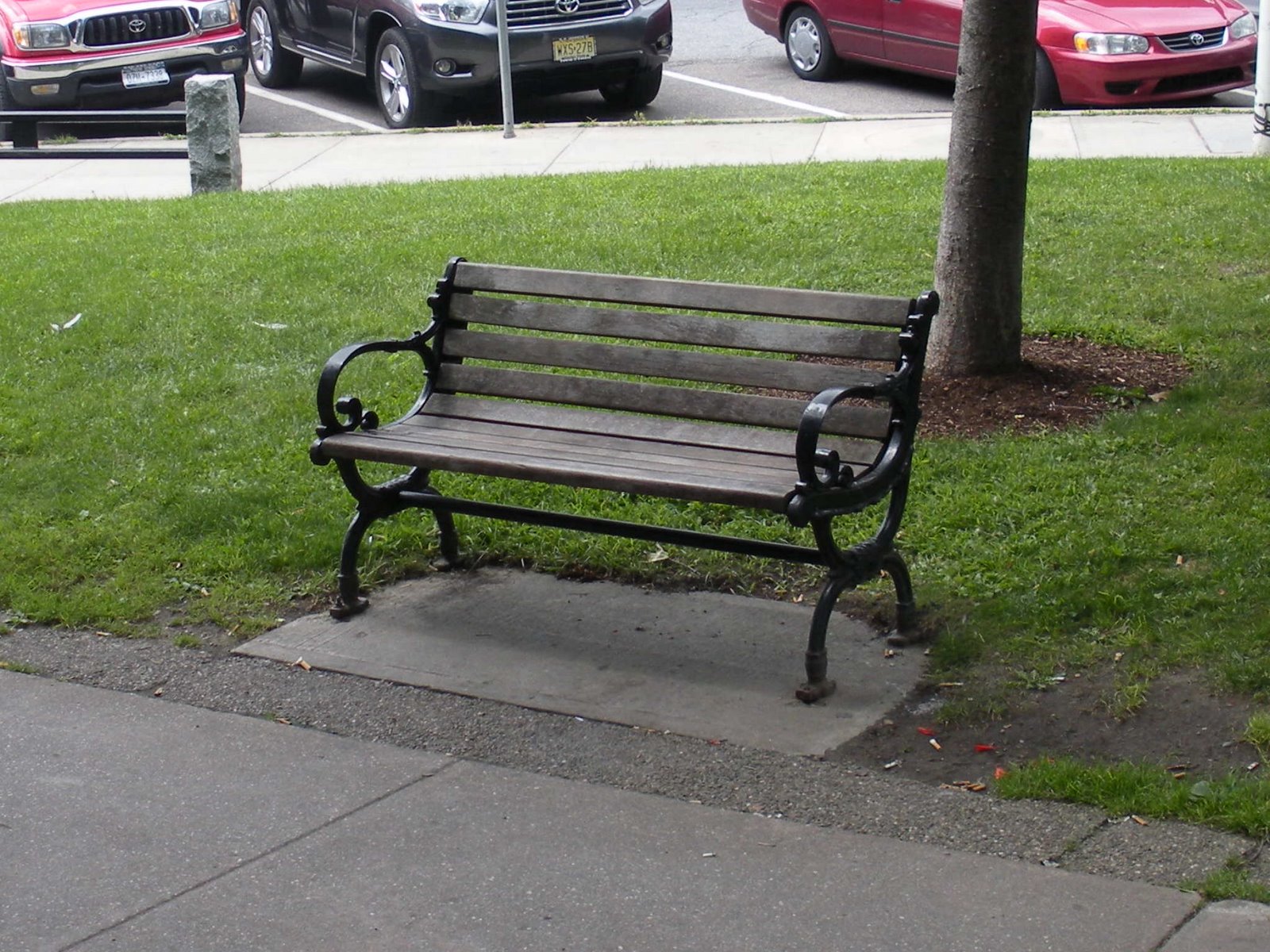
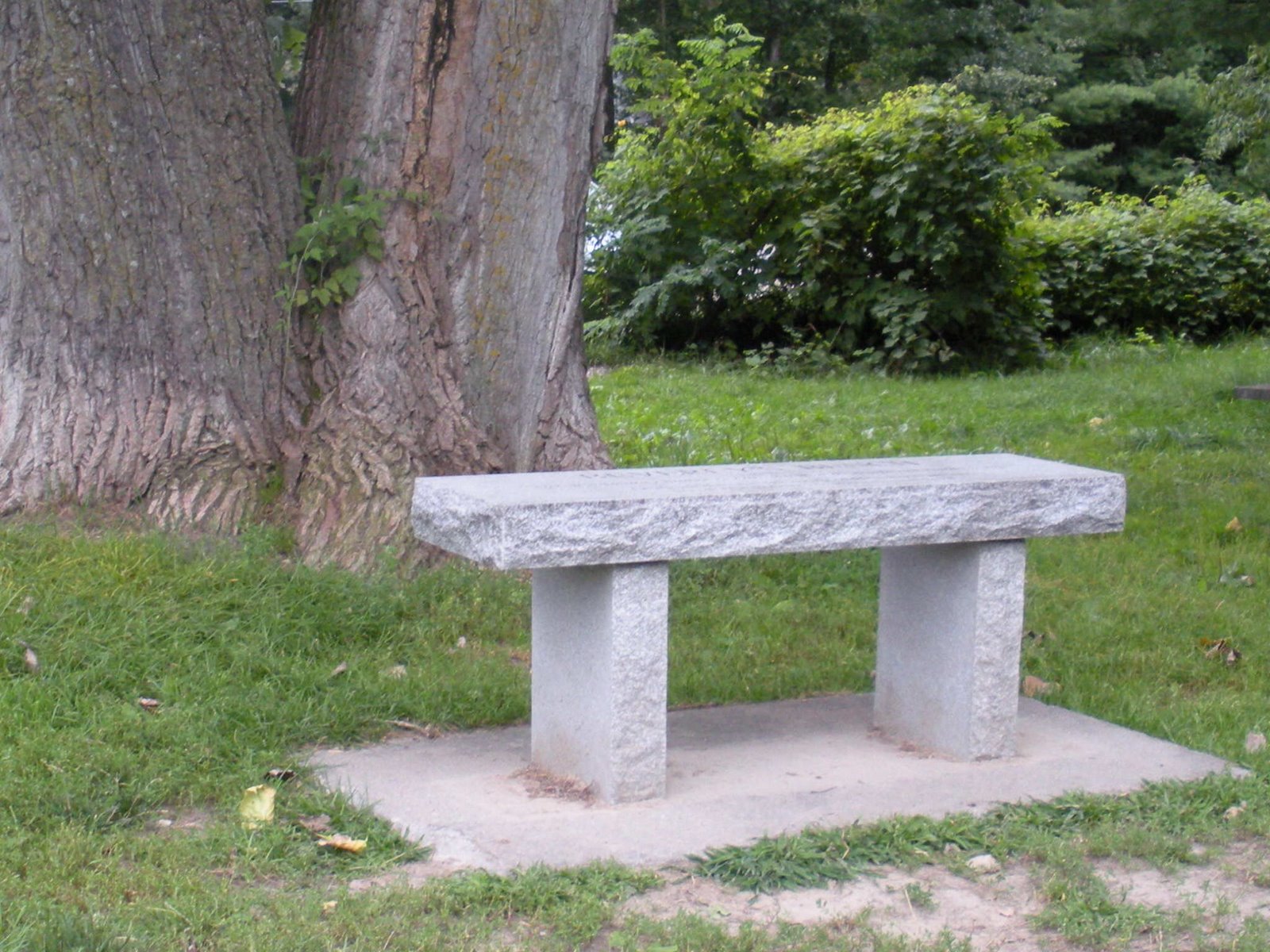
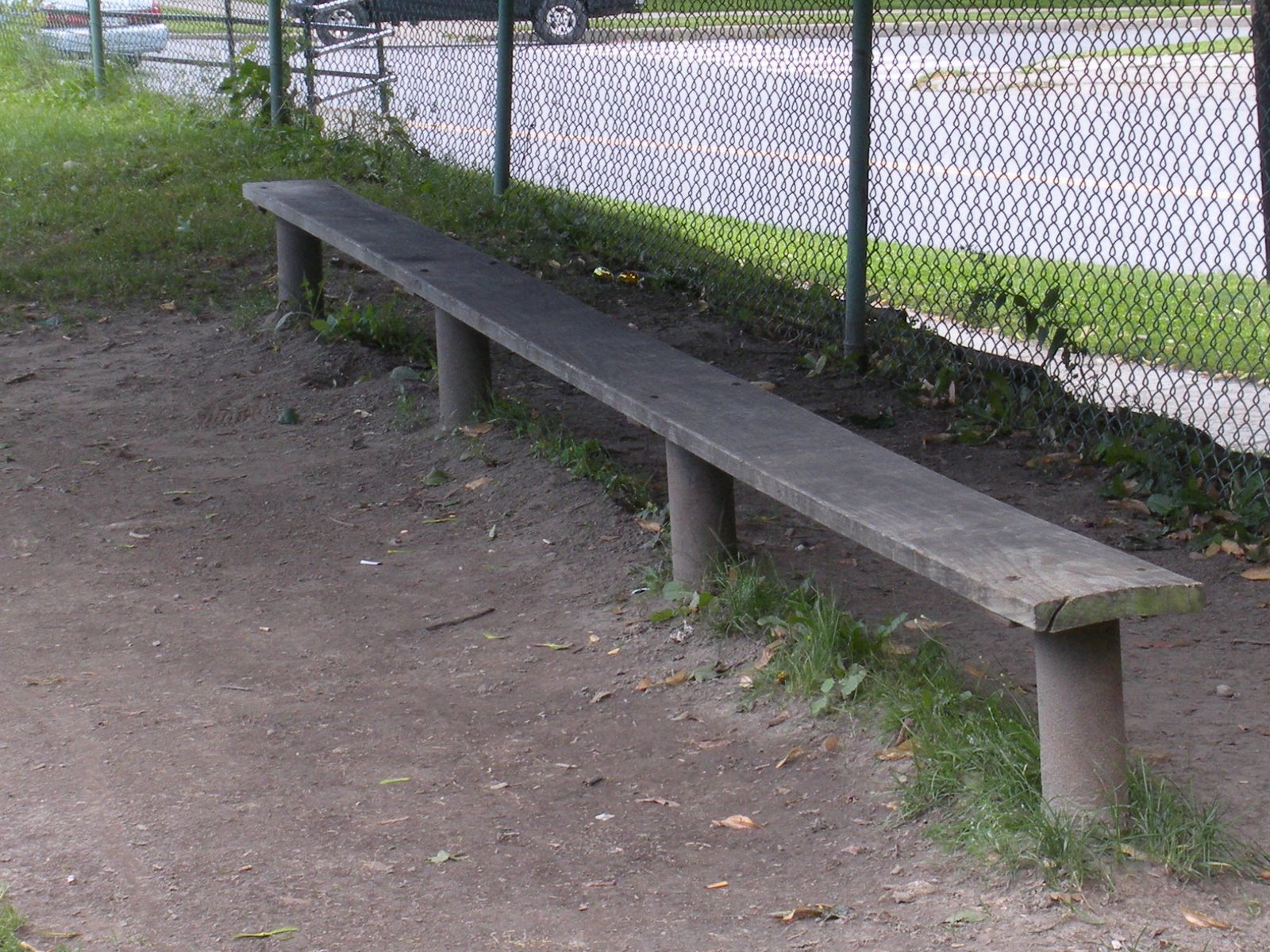
With this in mind, and contrary to what some may think, I feel fairly confident in my understanding of who I am and, to a less-important extent, where I’m going. In fact, I’m so confident in who I am and where I’m going at this point in my life, that I’m not afraid to stop and sit down around town from time to time to absorb the life I’m living on my journey, for even when I’m sitting, I feel as though I can still see my destination on the horizon.

The only question that remains now, and one that I’ve begun to seriously reconsider is, who am I capable of loving? There’s no guarantee in this life that I’ll ever find an answer to that question and yet, I still have hope. That’s just who I am.

BBGE Recap, Episode II

August 19, 2008 – The Russian’s new house (Three Cups of Tea by Greg Mortensen)

For this recapper (Mr. Benchly), the Best Book Group Ever (BBGE) began at 6:15 p.m. when he realized he had forgotten to make a salad for BBGE. After a quick trip to the store during which he planned a salad that would require the least amount of work, Mr. Benchly placed said salad in his mother’s wooden salad bowl and wondered aloud whether or not anyone in the book group would notice such a grown-up kitchen dish coming from such a non-grown-up. Unsure of which house was The Russian’s, Mr. Benchly looked around and saw a number of BBGE cars parked on a corner and assumed they were on to something. He walked through the front door to discover The Russian, The Canadian, CAT, The Heinous Shrew, The Professor, and The Mother had already arrived. Any other time and he would have been embarrassed by his tardiness, but not while carrying a grown-up salad bowl. The Dean was busy being a dean; The Newbie was busy sleeping off her exhaustion.

The book group spent the first hour or so chowing down on appetizers on the kitchen counter (brought earlier by The Dean[?]). The salsa reminded Mr. Benchly of the salsa CAT served during a recent visit to her house, which was left over from a recent party at her house. The Dean was at this party and so Mr. Benchly’s theory was that The Dean brought this same salsa to the recent party at CAT’s house. It was fruity and good. There were other appetizers but this recapper didn’t try any because he wasn’t sure how to eat them. Other book groupers ate them, though, so he’s pretty sure they were good.

At some point, discussion turned to CAT’s recent trip out west with her soon-to-be live-in boyfriend, CAT Lover. After a few details that would subsequently be proven by other news to be inconsequential but which this recapper still remembers (e.g., CAT got free Cliff bars), CAT revealed that CAT Lover complemented the romantic setting of a gorgeous and isolated Wyoming mountain top with a question whose answer instantly made him CAT’s soon-to-be live-in fiancé, CAT Lover. Book group was pleased. As was CAT. And then The Dean showed up and CAT gave him the abridged story (sans the part about Cliff bars), and The Dean gave CAT two hugs.

Other book group relationship news included The Heinous Shrew’s decision to move into a new apartment with her boyfriend (aka, our veggie eggplant entrée chef) in the South End of Burlington. This recapper called her a traitor to the Old North End (ONE) while ignoring the not-discussed fact that he had also moved out of the ONE. The Heinous Shrew seemed happy with her decision, though slightly bummed that she would now have to cross Pearl Street for the first time in 13 years(?). There would be more relationship discussions, but not before dinner.

Dinner was served after 8 p.m. and consisted of said salad in the said grown-up salad bowl by Mr. Benchly, the aforementioned eggplant dish by The Heinous Shrew’s boyfriend, brought by The Heinous Shrew, a cheese/tomato veggie side by CAT, chicken and Cornish game hens by The Russian, Great Harvest bread by Great Harvest brought by The Russian, and wine brought by The Canadian and The Mother. It was decided that yet again, the BBGE had compiled a delicious dinner. After a quick walk down BBGE nostalgia lane in which we determined that our little book group was nearly five years old, talk turned to The Dean’s recent house guests who resisted the temptation to not pass gas in his house. CAT and The Mother thoroughly enjoyed The Dean repeatedly saying “fart.” At this point, and maybe in an effort to prove that book group wasn’t just about fart jokes, The Professor segued into a discussion on the book, which, unfortunately, it appeared as though only three and a half of us had read (The Professor, The Canadian, and CAT, plus half of The Dean). The Professor, The Canadian, and CAT gave us a very descriptive and rewarding panel recap and discussion of the book. For this recapper, it was like BBGE meets Cliff Notes. It should be noted that this panel discussion inspired The Mother to think about borrowing the book. Also worth mentioning is that she wouldn’t be able to borrow it from The Canadian because The Canadian had borrowed it from the library per CAT’s suggestion.

The post-dinner conversation over dessert brought by The Professor, ranged from The Russian’s tales of tails and how close she and her boyfriend are to opening their doggie daycare business, to The Heinous Shrew trying to give away her 1-year-old drunk girl cat (so named because he was acquired last year from a drunk girl downtown), to The Russian trying to give away her parents’ furniture (which both The Heinous Shrew and Mr. Benchly were interested in for their respective reasons), to the Front Porch Forum’s ability to find this recapper’s blog, to The Dean’s recent adventures in dating. We discussed The Dean’s options (Bachelorette #1 and Bachelorette #2); some of us liked #1 while others liked #2. The Heinous Shrew mentioned that The Dean should consider who was the easiest one to plan a date for and that’s the one he “should do.” This recapper was amazed at how red The Heinous Shrew’s face turned at the realization of what she had said. And thanks to the wonders of the Internet, we even saw a picture of Bachelorette #1 who, most everyone agreed, was super cute. The Heinous Shrew was dubious and claimed the picture could just be an optical illusion. The Russian then showed us two options for her new business logo and per BBGE standards, some liked the blue while others liked the green. The Dean was dubious because colors always look different on a computer screen.

After settling down and choosing our next book, meeting time/location, and food/wine bringers, it was time (9:45 p.m.) for book group to come to an end. And as this recapper left The Russian’s house with his mother’s grown-up salad bowl in hand, and as he drove home to his parents’ house where he’s staying until he moves into a new ONE apartment with a new roommate September 1, he thought of all the changes happening in the BBGE’s relationships, whether spoken or not. A lot happens in a month and he can’t wait to hear everyone’s updates next month.